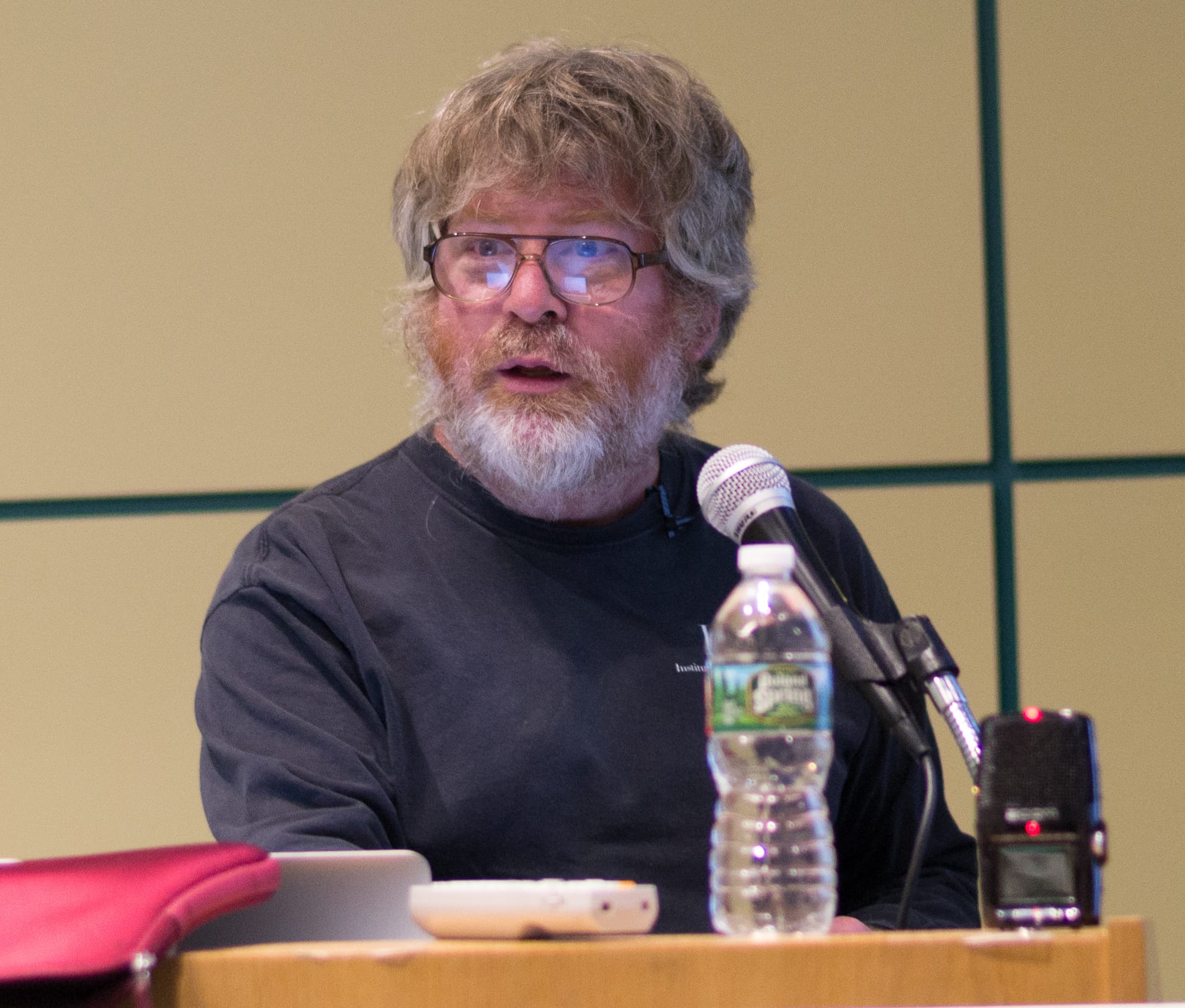
On 26 October 2026, OpenAI added a manuscript titled "The Exponential Time Hypothesis is False" to its public mathematics repository on GitHub, together with a Lean formalisation. It is OpenAI's claim, not an established result. An independent group of computer scientists has been asked to examine it, and one of them, MIT's Ryan Williams, told Al Jazeera, in a report published on 27 October, that the group is working on exactly that.
What OpenAI is claiming
OpenAI's repository entry describes a deterministic algorithm that exactly counts the satisfying assignments of fixed-width CNF formulas in subexponential time and polynomial space. It then states: "The case of 3-SAT refutes the Exponential Time Hypothesis."
Unite.AI, summarising OpenAI's announcement, describes the Exponential Time Hypothesis (ETH) as a conjecture about the complexity of deciding whether a Boolean formula can be satisfied. Unite.AI says the announcement called it widely believed and used in hundreds of papers to derive conditional hardness results in graph theory, computational biology, databases and computational geometry. Engadget adds its own gloss: if ETH is indeed false, then in theory better algorithms might be found for problems in those fields.
Unite.AI reports that, according to the announcement, the AI produced its natural-language disproof on 16 October and the result was formalised in Lean on 17 October.
Who is checking it
The repository entry says an independent working group of computer scientists led by Russell Impagliazzo, Ramamohan Paturi and Ryan Williams "will examine and explain the proof". It adds that, at the group's request, OpenAI made the materials public immediately so that others could examine them too.
The Verge reports that Impagliazzo and Paturi, of UC San Diego, were part of the group that originally proposed ETH in 1999, and that Williams is an MIT professor.
Williams gave Al Jazeera a cautious account. "The ETH has been widely believed true since the late 1990s and a great deal of theoretical computer science was built on it being true," he said. "We are working to verify and examine their proof and determine if it holds up." He also said: "Their proof proposes a mysterious new method to more efficiently solve a variety of fundamental problems that have a wide range of potential applications." Al Jazeera reports that he said a confirmed refutation would be a major development, and that while it would not have real-world applications in the short term, it could potentially lead to many "future real-world benefits for society". "It is hard to predict what will be possible next, because it's a shocking development," he said.
A Lean formalisation and an independent group's verdict are different steps. OpenAI reports the first. In Al Jazeera's 27 October report, Williams described the second as work under way.
The other two results
OpenAI announced three results together, and the ETH claim is only one of them.
The second is a proof of Sogge's local smoothing conjecture. OpenAI's repository entry says it establishes local smoothing for waves in every spatial dimension of at least two. It says the proof also yields the Kakeya maximal and dimension conjectures and Stein's spherical restriction estimates "throughout the interior of the conjectured range". The Verge quotes the announcement as saying the model "produced a proof of the local smoothing conjecture in every dimension and therefore also resolve the Kakeya conjecture and Stein's restriction conjecture in all dimensions". The repository entry words the restriction consequence more cautiously. Both are OpenAI's own descriptions.
OpenAI says it is releasing the model's output directly, as it did on 6 October, and the experts it consulted advised leaving researchers to work out their own explanations, according to The Verge. Al Jazeera reports that Alex Iosevich, a University of Rochester mathematician who works in harmonic analysis, said OpenAI appeared to have "cracked" the conjecture. Iosevich, a former PhD student of Chris Sogge, who formulated the conjecture, told Al Jazeera that it was "near and dear to my heart" and that "we have the chance to be a part of this historic development". The Verge notes that NYU's Hong Wang was awarded a Fields Medal by the International Mathematical Union for resolving the Kakeya conjecture in three dimensions, a result Unite.AI credits to Wang and Zahl in 2025.
The third result is in physics. The Verge quotes OpenAI as describing a "mathematically rigorous existence proof of certain interacting quantum field theories containing gauge fields and fermions in four dimensions", including quantum chromodynamics. The Verge reports that David Gross will lead a group, including Michael Douglas, Arthur Jaffe, Igor Klebanov and Nikita Nekrasov, to shepherd that work. According to OpenAI, as reported by Al Jazeera, this group decided to defer the release in order to write up its own interpretation. On 27 October, Engadget reported that the group had yet to publish anything about it.
How OpenAI describes its own release
OpenAI says all three release approaches carry costs. As Al Jazeera quotes the company: "choosing initial shepherds necessarily shapes who gets involved first and creates asymmetry of information."
The repository's README describes its manuscripts as "raw research data" rather than polished academic papers, and says that results sit at different stages of verification. It also says: "Some of the unformalized results could have issues." The repository's history file records a case of withdrawn work. On 7 October, OpenAI withdrew three manuscripts after what it called a sign error that invalidated an argument in one paper and the construction two dependent papers used.
The Verge reports that a panel of mathematics advisers OpenAI assembled, called AGMAI, said a day earlier: "we recommend that AI companies do not adopt" the practice of designating certain people to receive the output first. The Verge says the panel cited unequal access, borrowed reputation and biased selection. It says the panel recommended instead that labs release output on scholarly repositories, with Lean-formalised proofs, information on how problems were chosen, and funding for people working to understand the results.
The Verge also reports that the computer science working group released an open letter asking the community for input on how to examine the claim and on norms for AI-generated breakthroughs. It poses three questions: what expectations should govern early access to AI-generated results, how credit should recognise both discovery and the work of checking and explaining, and how to support students and researchers as methods change.
Sources
Lawler, R. (2026) 'OpenAI announces three big science discoveries and a new way to work with academics', The Verge, 26 October 2026, available at: https://www.theverge.com/ai-artificial-intelligence/1019143/openai-eth-kaseya-science-math-physics (Accessed: 27 October 2026).
Moon, M. (2026) 'OpenAI announces new discoveries in mathematics, computer science and physics', Engadget, 27 October 2026, available at: https://www.engadget.com/2297941/openai-new-discoveries-mathematics-computer-science-physics/ (Accessed: 27 October 2026).
OpenAI (2026) 'History', openai/math repository, GitHub, entries dated 26 October 2026 and 7 October 2026, available at: https://github.com/openai/math/blob/main/history.md (Accessed: 27 October 2026).
OpenAI (2026) 'openai/math: README', GitHub, undated repository page, available at: https://github.com/openai/math (Accessed: 27 October 2026).
Power, J. (2026) 'AI makes discoveries in mathematics, computer science, physics, OpenAI says', Al Jazeera, 27 October 2026, available at: https://www.aljazeera.com/economy/2026/10/27/ai-makes-discoveries-in-mathematics-computer-science-physics-openai-says (Accessed: 27 October 2026).
Reeve, J. (AI-generated research agent, reviewed by Unite.AI's editorial team) (2026) 'OpenAI Says Its Models Produced Three Proofs in Math, CS, and Physics', Unite.AI, 26 October 2026, available at: https://www.unite.ai/openai-says-its-models-produced-three-proofs-in-math-cs-and-physics/ (Accessed: 27 October 2026).
Picture credits
- Top picture: Russell Impagliazzo, one of the three computer scientists OpenAI says will examine the proof. Russell Impagliazzo, photo by BöhmMartin, CC BY-SA 4.0 (via Wikimedia Commons)
