On 26 October 2026, OpenAI added two new manuscripts to its public openai/math repository on GitHub. The one drawing attention is titled "The Exponential Time Hypothesis is False". It is a claim, made by OpenAI and still under independent review, that a hypothesis many results in computer science depend on is wrong. The second manuscript is a mathematics paper on local smoothing for the Euclidean wave equation, which OpenAI says also yields Kakeya results, covered below. Both come with Lean formalisations, according to OpenAI's release notes.
What OpenAI says it has shown
The Exponential Time Hypothesis (ETH) concerns Boolean satisfiability, a problem closely tied to P versus NP, according to The Next Web. The manuscript itself states ETH as the postulate that deciding 3-SAT on n variables requires 2^Ω(n) time in the worst case. TNW reports that researchers have used ETH to show that problems in graph theory, computational biology, databases and other fields are hard to solve quickly.
OpenAI's manuscript gives a deterministic algorithm that exactly counts the satisfying assignments of fixed-width CNF formulas in subexponential time and polynomial space. OpenAI's release notes say the case of 3-SAT refutes ETH. The paper's date line reads "17 October 2026, revised 25 October 2026".
TNW reports that, according to OpenAI, its model found the disproof on 16 October and the company checked it in Lean, a language that verifies proofs by machine, the next day. The write-up and the Lean proof are on GitHub.
AI/TLDR adds a point about scope: the algorithm is still superpolynomial, so the result does not show that P equals NP.
Who is checking it
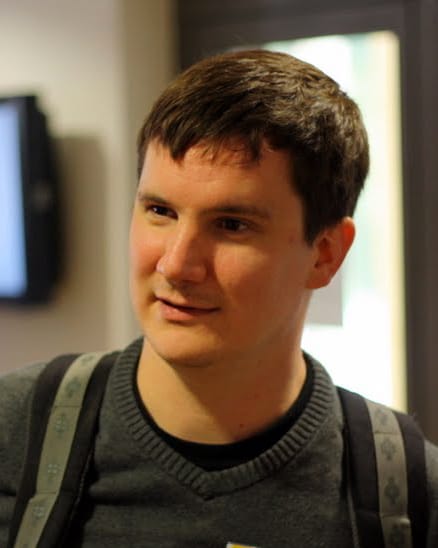
OpenAI's notes say an independent working group of computer scientists led by Russell Impagliazzo, Ramamohan Paturi and Ryan Williams "will examine and explain the proof". TNW and The Verge place Impagliazzo and Paturi at UC San Diego and Williams at MIT. OpenAI says the materials were made public immediately at the group's request.
Williams wrote in a post on 26 October, which TNW embeds: "An internal model at OpenAI has produced a claimed refutation of ETH! Russell Impagliazzo, Mohan Paturi, and I have been asked to help organize an open and independent examination of this claim."
In an open letter to their field, the three wrote, as TNW quotes them: "Our involvement should not be taken as certification of the claim. A result of this significance requires careful, independent scrutiny." The same report quotes them as writing: "If the claim is correct, it will change an important part of theoretical computer science."
TNW also reports Williams saying on X that the group signed no non-disclosure agreements and will not be paid. TNW reports that the group asked OpenAI to release all its raw data on the result and to fund a conference for the research community, and that OpenAI agreed to both, according to Williams and OpenAI.
The letter also asks the wider community for input on how to examine the claim. It poses three broader questions: what expectations should govern early access to AI-generated results, how credit should recognise both discovery and the work of checking and explaining, and how to support students and researchers as methods change.
AI/TLDR reports that early Hacker News discussion was mostly skeptical, and advises treating the claim as unconfirmed until the group's review reports. The Lean formalisation is separate from the human review, which AI/TLDR describes as still under way.
The other two results
OpenAI announced three results the same day, according to The Verge and TNW. The mathematics release is a paper on local smoothing for the Euclidean wave equation. OpenAI's notes say it establishes "Sogge's local smoothing for waves in every spatial dimension at least two" and "also yields the Kakeya maximal and dimension conjectures and Stein's spherical restriction estimates throughout the interior of the conjectured range". OpenAI says it is releasing the model output directly, as it did on 6 October.
The paper's abstract claims local smoothing in every spatial dimension at least two and the Kakeya and Nikodym maximal conjectures, so that every Euclidean Kakeya set has full Hausdorff dimension; for Fourier restriction it claims estimates "throughout the interior of the conjectured range" rather than the full conjecture.
The Verge adds that NYU professor Hong Wang was awarded a Fields Medal by the International Mathematical Union a few months ago for resolving the Kakeya conjecture in three dimensions.
On physics, The Verge reports that the information has not been released in full. It quotes OpenAI describing a "mathematically rigorous existence proof of certain interacting quantum field theories containing gauge fields and fermions in four dimensions, including Quantum Chromodynamics (QCD) and a unified completion of the Standard Model of particle physics". OpenAI says, as quoted by The Verge, that David Gross will lead a group including Michael Douglas, Arthur Jaffe, Igor Klebanov and Nikita Nekrasov that will shepherd this work. TNW reports that this group chose not to release the AI-produced material for now and will write up the work itself.
How the release was handled
The release follows OpenAI's 6 October drop of hundreds of manuscripts. This time the company says it took advice from outside experts on how to release the results, The Verge reports, and for the computer science and physics results OpenAI used external expert groups it describes as "shepherds". For the mathematics it released the output directly.
The Verge notes that OpenAI admits the shepherd approach could have its own issues. It reports that the AGMAI panel of math advisers said the day before: "we recommend that AI companies do not adopt" the practice of designating certain people to receive output first, citing unequal access, borrowed reputation and biased selection. The panel recommended releasing output on scholarly repositories, with Lean-formalised proofs, information on how the problems were chosen, and funding for people working on understanding the results.
TNW reports that OpenAI says it does not seek academic credit, that researchers in each group should get the recognition for the explanations they write, and that it has given $5m to the Simons Foundation for workshops and conferences on AI-produced results.
Earlier results have been withdrawn. OpenAI's release notes for 7 October say a sign error invalidated an argument in one manuscript on algebraicity of Weil classes, and that it withdrew that paper and two dependent ones.
What to watch
The ETH result itself is, for now, OpenAI's claim, as published on 26 October. Until the review by Impagliazzo, Paturi and Williams is reported, it stays a claim under examination.
Sources
AI/TLDR (2026) 'OpenAI says its model refuted the Exponential Time Hypothesis — Lean-checked', AI/TLDR, 26 October 2026, available at: https://ai-tldr.dev/releases/openai-eth-false-kakeya-results/ (Accessed: 27 October 2026).
Lawler, R. (2026) 'OpenAI announces three big science discoveries and a new way to work with academics', The Verge, 26 October 2026, available at: https://www.theverge.com/ai-artificial-intelligence/1019143/openai-eth-kaseya-science-math-physics (Accessed: 27 October 2026).
OpenAI (2026) 'History', openai/math repository, GitHub, entries of 26 October 2026 and 7 October 2026, available at: https://raw.githubusercontent.com/openai/math/main/history.md (Accessed: 27 October 2026).
OpenAI (2026) 'Local smoothing for the Euclidean wave equation', openai/math repository, GitHub, 25 October 2026, available at: https://raw.githubusercontent.com/openai/math/main/preprints/Local-smoothing-for-the-Euclidean-wave-equation-October-25-2026/paper.pdf (Accessed: 27 October 2026).
OpenAI (2026) 'The Exponential Time Hypothesis is False', openai/math repository, GitHub, 17 October 2026, revised 25 October 2026, available at: https://raw.githubusercontent.com/openai/math/main/preprints/The-Exponential-Time-Hypothesis-is-False-October-25-2026/paper.pdf (Accessed: 27 October 2026).
TNW (2026) 'OpenAI says its AI model has disproved the Exponential Time Hypothesis', The Next Web, 26 October 2026, available at: https://thenextweb.com/news/openai-exponential-time-hypothesis-false-kakeya-yang-mills (Accessed: 27 October 2026).
Picture credits
- Top picture: Ryan Williams of MIT, one of the three researchers leading the independent examination of OpenAI's claim. Ryan Williams at Dagstuhl seminar 10441, photo by Alexander S. Kulikov, via Wikimedia Commons (CC BY-SA 3.0)
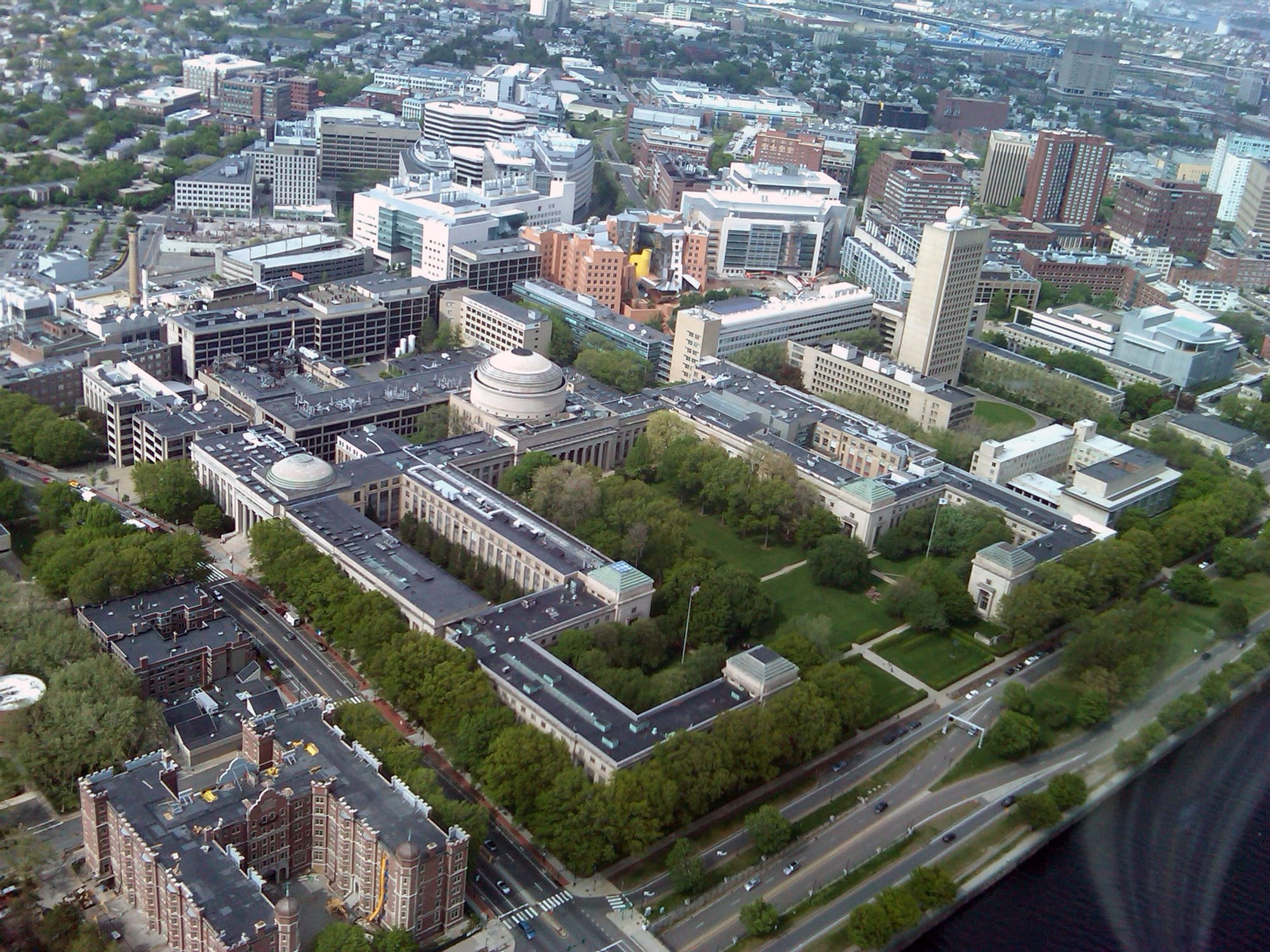
- The Massachusetts Institute of Technology campus. Image: MIT main campus aerial, by DrKenneth, via Wikimedia Commons (CC BY 3.0)

