
Meta has taken a passage out of its commercial terms after experts said it could let the company scrape websites, including news sites, to train its AI. The Verge reported the removal on 17 October 2026. Critics quoted by the Bay Area News Group's Mercury News say the revised wording still leaves questions open.
What was taken out
According to The Verge, the following language no longer appears on Meta's commercial terms page:
"… Meta may use any content from such domains, web pages, or URLs to provide, develop, improve, research, train, and maintain the integrity of, the Meta Company Products, services, and features provided under these Commercial Terms and any other applicable supplemental terms."
The Verge reports that many people, including James Grimmelmann, a professor of digital and information law at Cornell, had read the passage as an attempt to give Meta the right to use content scraped from sites to train its AI products for free. They also read it as overriding the blocking instructions in a site's robots.txt file. The Verge says Meta's update and a new statement remove the controversial language entirely.
The Mercury News (Cyrus Farivar) reported on the evening of Friday 16 October that Meta had made "clarifications" to the terms for its business and commercial products. It said the earlier version had given Meta sweeping new authority to scrape business users' websites for content to power its AI products without a contract or compensation, according to some legal and media experts.
Meta's position
Andy Stone, Meta's vice president of communications, and spokesperson Daniel Roberts had earlier pushed back on the criticism. The Verge quotes them as saying: "There is no change to how Meta uses web crawlers; any suggestion to the contrary is false."
In a follow-up statement sent to The Verge, which The Verge attributes to Roberts, Meta said:
"We've heard you and want to clarify: the crawling terms we consolidated only applied to our ads and business products, and we've clarified that in the terms themselves. It does not change how Meta uses web crawlers. As always, content owners can use robots.txt to signal their preferences. This is not about scraping news sites, and these updates don't give us new rights that supersede those preferences."
The Mercury News quotes the same opening sentence from a statement Roberts emailed to it just after 5 p.m. on Friday, which it says came from an unnamed Meta spokesperson.
The UAE site tbreak reports that Stone said the update is designed to pull accurate product information for sale on third-party websites for on-platform ad and content recommendations, not to scrape news sites.
What the new wording says, and the objections
The Mercury News says the revised terms still let Meta's "automated software" grab "any content", but now in service of "advertising and business products", among other rationales. It cites "maintain the integrity and security of Meta Company Products" as one of those rationales. The paper says the new version appears to dial back the earlier claims and to remove some of the more explicit language, but that many questions remain.
Two of the people the Mercury News quoted say those questions are still open:
- Sam Quigley, director of communications for the News/Media Alliance, a journalism trade group, said the group remains "concerned about the language". He said: "It appears as if the new language just limits what Meta is allowed to use publisher content for, but not their ability to crawl and get the content in the first place." He added: "They may have taken out training from the listed uses, but with it not being expressly ruled out, it's still potentially on the table. They say they'll respect robots.txt, but there are no guarantees there. This is still a non-starter as far as we're concerned."
- Eric Goldman, a tech law professor at Santa Clara University, told the Mercury News that the revisions are narrower but "still vague and potentially overbroad". In an email he said: "That catchall reference to 'maintain the integrity and security of Meta Company Products' could mean anything." He also wrote: "Also, Meta's continued insistence that it will honor robots.txt is still not incorporated into this language. If Meta really plans to honor robots.txt, why not say so expressly in the (terms of service)?"
tbreak's article of 17 October, citing The Register, reports Goldman making a similar point about the earlier text: that it "doesn't expressly say that Meta will respect those robots.txt instructions", and that the law doesn't necessarily compel anyone to respect them either. The same article reports that News/Media Alliance CEO Danielle Coffey called the original version of the policy "outrageous and probably illegal" in a statement.
Who is affected, and when
The Mercury News says the second version, like the first, is set to take effect on 30 October 2026 and affects all entities with free business accounts, which Meta encourages for "businesses, brands, and celebrities". It adds that such accounts are in common use across many industries, including the media.
tbreak, citing Nieman Lab, reports that anyone who runs ads, manages a Page or Group, lists products or uses Meta Business Suite agrees to the new terms by continuing to use Facebook, Instagram or WhatsApp after that date. The site also says business accounts have no option to opt out ahead of 30 October, and that the only route is to stop using Meta's products for business purposes. tbreak's article describes the terms as Meta previewed them, so its detail may not reflect the latest revision.
Where this leaves things
The disputed passage has gone, and Meta says its use of web crawlers is unchanged. The News/Media Alliance and Eric Goldman, as quoted by the Mercury News, do not regard the matter as settled. Their objection is not only to what the text now allows but to what it still does not rule out, including a robots.txt commitment that is not written into the contract. Meta's assurances are statements from the company. The contract language is what businesses will be asked to accept.
Sources
Farivar, C. (2026) 'Meta updates data scraping policy following criticism', The Mercury News, 16 October 2026, available at: https://www.mercurynews.com/2026/10/16/meta-updates-data-scraping-policy-following-criticism/ (Accessed: 17 October 2026).
Jaffar Ali, A. (2026) 'Meta's new business terms let it crawl your website for AI training from 30 October', tbreak, 17 October 2026, available at: https://tbreak.com/meta-commercial-terms-ai-scraping/ (Accessed: 17 October 2026).
O'Brien, T. (2026) 'Meta removes language that may have allowed it to scrape news sites', The Verge, 17 October 2026, available at: https://www.theverge.com/tech/1013409/meta-removes-language-that-may-have-allowed-it-to-scrape-news-sites (Accessed: 17 October 2026).
Picture credits
- Top picture: File photo of Mark Zuckerberg, whose company Meta has revised its business terms. Mark Zuckerberg, photo by Silverisdead (CC BY 2.0, Wikimedia Commons)
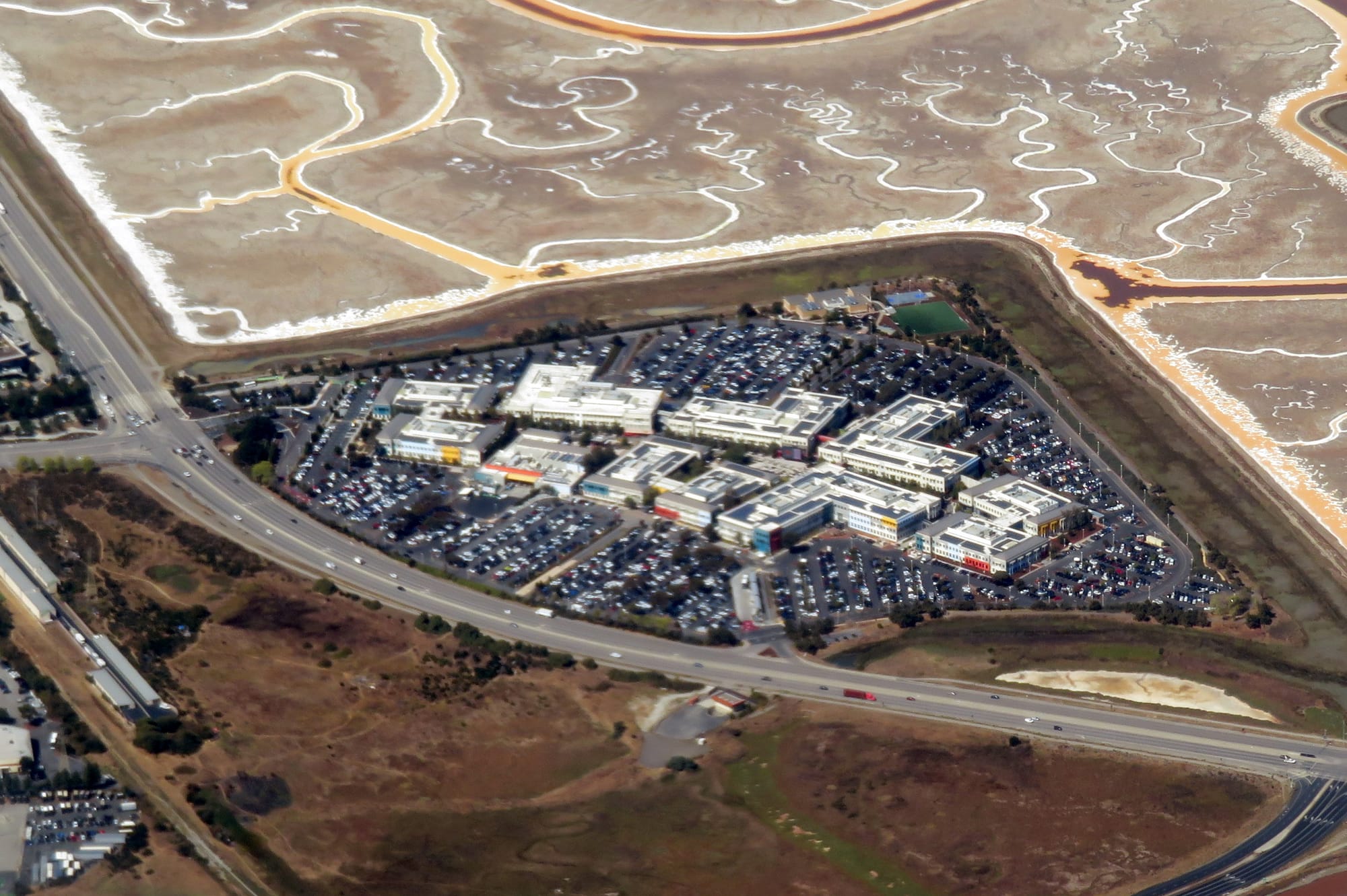
- File photo of the Menlo Park, California, area where Meta has its corporate headquarters. It does not show the terms or any events described here. Aerial view of the Meta (Facebook) campus, Menlo Park, photo by Pi.1415926535 (CC BY-SA 3.0, Wikimedia Commons)

