Personal AI agents were sold as software that could book the flight, reserve the table or buy the shoes for you. In recent weeks, The Verge reports, users of Meta's Muse, xAI's Grok, OpenAI's Dots and Instinct have reported blocks stopping those agents from doing tasks on top websites. Some of the blocks are deliberate and some may not be. Several companies have now said, on the record, where they stand.
Amazon and Muse
Meta's Muse agent arrived on 8 September 2026, according to Forkast, a news outlet whose report was carried on Yahoo Finance. By 21 September, Forkast reported, Amazon had blocked the agent from shopping on its platform. Forkast said users who tried were shown a popup stating that "continued access by an unauthorized AI agent violates Amazon's Conditions of Use."
Citing reporting by GeekWire, Forkast said Amazon's stated reasons were that Meta had not told it about the agent's activity, that the agent does not properly identify itself, and that it captures user credentials. Meta pushed back, Forkast reported, saying Muse "has no visibility into people's passwords or payment methods."
Amazon had already been fighting agents. The Verge reports that Amazon sued Perplexity over its agentic shopping feature. Forkast dates the suit to November 2025 and says a judge granted a preliminary injunction by March 2026. Both outlets report that an appeals court overturned the ruling in August, and The Verge adds that Amazon has since filed an amended complaint. Perplexity's side, as The Verge reports it, is that Amazon objects because agents mean fewer human eyeballs on its ads.
JPMorgan: no outside agents in customer accounts

The clearest statement from a bank came on Tuesday 13 October. JPMorgan Chase chief executive Jamie Dimon told analysts on the bank's third-quarter earnings call, as CNBC reported: "We're not going to allow just any … outside agent to come in inside the company, because it's just too risky for clients and for JPMorgan." He added: "You don't want rogue agents, and it could be thousands of them."
A JPMorgan spokeswoman confirmed to CNBC that the bank currently blocks external AI agents from operating on behalf of retail customers. She said: "Because it is not safe, we do not permit third parties to access accounts by obtaining customers' banking credentials and logging in on their behalf." She also said the bank supports "secure, customer-authorized data sharing through open banking providers."
CNBC reported what that means in practice. An agent can see some data, such as balances, in a read-only way if Plaid or another connector has the user's credentials. It cannot send money or pay a bill. The spokeswoman added that there is no timeline for when the bank would have safeguards in place for agents to interact directly with customer accounts.
Dimon also raised who carries the risk if a customer uses an outside agent. "If people are using them, they should understand the risk," he said. "They should understand there's a liability transfer."
CNBC also reported that JPMorgan has started a targeted pilot of its own AI tool, Smart Cash, which aims to predict a user's cash flow and move funds to maximise yield, as Chief Financial Officer Jeremy Barnum said on Tuesday. CNBC's own reading was that this would appear to be a defensive move against external agents. The Verge reports that Charles Schwab has also confirmed it is blocking AI agents from accounts over security concerns.
Airlines, Yelp and a long list of complaints
TechCrunch spoke to several companies. Yelp told it that it does not permit non-human traffic on its platform unless the agent has paid to access Yelp's content and data through its data licensing programme. An agent without a formal partnership with Yelp will therefore likely fail at tasks such as booking a table, TechCrunch wrote.
Delta did not say outright that it blocks agents. Its general manager of Global Communications, Heena Chavda, said Delta "does not currently have a partnership or integration that enables a third-party AI agent to shop for or book Delta flights on a customer's behalf on our digital platforms." She said Delta is "continuing to evaluate how new technology, including external AI agents, could enhance the way customers engage with Delta." Delta also told TechCrunch it is taking steps to protect customers from unauthorised automated activity. The Verge, for its part, describes Delta as preventing agents from booking tickets.
United pointed TechCrunch to its terms of use, under which users agree not to use any robot, spider, other automatic device or manual process to monitor or copy the site, or for any other unauthorised purpose, without United's prior written permission. It did not answer a follow-up about whether it blocks specific agents such as Muse.
eBay told TechCrunch it does not prohibit all third-party shopping agents from completing purchases, but its policies restrict unauthorised agents and actions such as automated scraping and model training. Zillow emailed TechCrunch after publication to say it allows AI agents acting for consumers, but its anti-bot measures against scraping can occasionally block certain agents.
Beyond those statements, TechCrunch reported complaints on social media naming Yelp, eBay, Zillow, Pizza Hut, Adidas and various airlines. Adidas and Pizza Hut had not responded to TechCrunch by the time it published on 6 October. The Verge adds that some users report that sites that previously worked with their agent, including Cars.com and Amtrak, are no longer accessible.
Blocks that may not be deliberate
Not every failure is a decision to shut agents out. TechCrunch reported complaints that Muse could not complete purchases on Walmart's site. A Walmart spokesperson told TechCrunch these were not intentional. Walmart is in fact partnered with Muse, TechCrunch noted, as announced at Meta's Connect developer conference in September. The likely culprit, TechCrunch wrote, is a button that must be clicked to prove the visitor is human. If the agent's session is interrupted, the check can fail and the agent is booted out.
Chris Canal, chief executive of the AI safety evaluator EquiStamp, made a similar point to The Verge. "There are all kinds of things that are set up not even to block agents, but to block in general bots or programs that are trying to scam or hack," he said. "These AI agents trigger those same safeguards."
TechCrunch also reported that some people suspect Cloudflare and other content delivery networks are disrupting Muse traffic, linking it to a change to crawler defaults on 15 September. When TechCrunch asked, Cloudflare said it had no specific data to share and pointed to its public data hub, Cloudflare Radar.
How big is it, and what is Meta doing?
A wider count comes from Jefferies, the investment bank. As reported by Proactive on Yahoo Finance on 8 October, Jefferies tested Muse on several hundred leading US e-commerce, airline, online travel agency, hotel and reservation sites. About one-third blocked its access, one-third challenged or restricted it, and one-third were easy to navigate. Jefferies said new restrictions were appearing almost daily across the sites it tested.
Meta's answer has been partnerships and a standard. Proactive reported that Meta has set up sanctioned connectors with merchants including Walmart, Best Buy, Wayfair, Sephora and Dick's Sporting Goods, though many integrations are early-stage or not yet live. TechCrunch reported that Meta has announced plans to develop an open standard for how AI agents communicate with businesses in online commerce. Meta said in its announcement: "Turning away a personal agent means turning away the customer behind it. We'd rather work with businesses to address the underlying concerns than see them lose that customer."
The Verge approached OpenAI and Google for comment on the roadblocks their agents face and had not heard back when it published on 17 October. Instinct declined to comment.
The pattern across these accounts is that some companies have stated outright that they block agents. Others have said they have no arrangement with them or restrict them under existing rules, and many of the reported blocks rest on user complaints rather than anything the sites involved have said. The practical result for anyone using an agent is the same, and it is hard to tell from the outside whether a failure was deliberate.
Sources
CNBC (2026) 'JPMorgan blocks outside AI agents like Muse, Instinct from account access', CNBC, 13 October 2026, available at: https://www.cnbc.com/2026/10/13/jpmorgan-ai-agents-account-access.html (Accessed: 17 October 2026).
Perez, S. (2026) 'The next hurdle for AI agents: getting websites to let them in', TechCrunch, 6 October 2026, available at: https://techcrunch.com/2026/10/06/the-next-hurdle-for-ai-agents-getting-websites-to-let-them-in/ (Accessed: 17 October 2026).
Proactive (2026) 'Meta's Muse AI agent blocked by one-third of websites tested, Jefferies says', Yahoo Finance, 8 October 2026, available at: https://finance.yahoo.com/technology/ai/articles/metas-muse-ai-agent-blocked-170000815.html (Accessed: 17 October 2026).
Roth, E. (2026) 'Websites are closing their doors to AI agents', The Verge, 17 October 2026, available at: https://www.theverge.com/ai-artificial-intelligence/1013195/ai-agents-blocked-web (Accessed: 17 October 2026).
Vaughn, T. (2026) 'Amazon Blocks Meta's Muse Agent From Shopping — And Signals a New Tollgate for Agent Commerce', Forkast News, via Yahoo Finance, 21 September 2026, available at: https://finance.yahoo.com/technology/ai/articles/amazon-blocks-meta-muse-agent-123836124.html (Accessed: 17 October 2026).
Picture credits
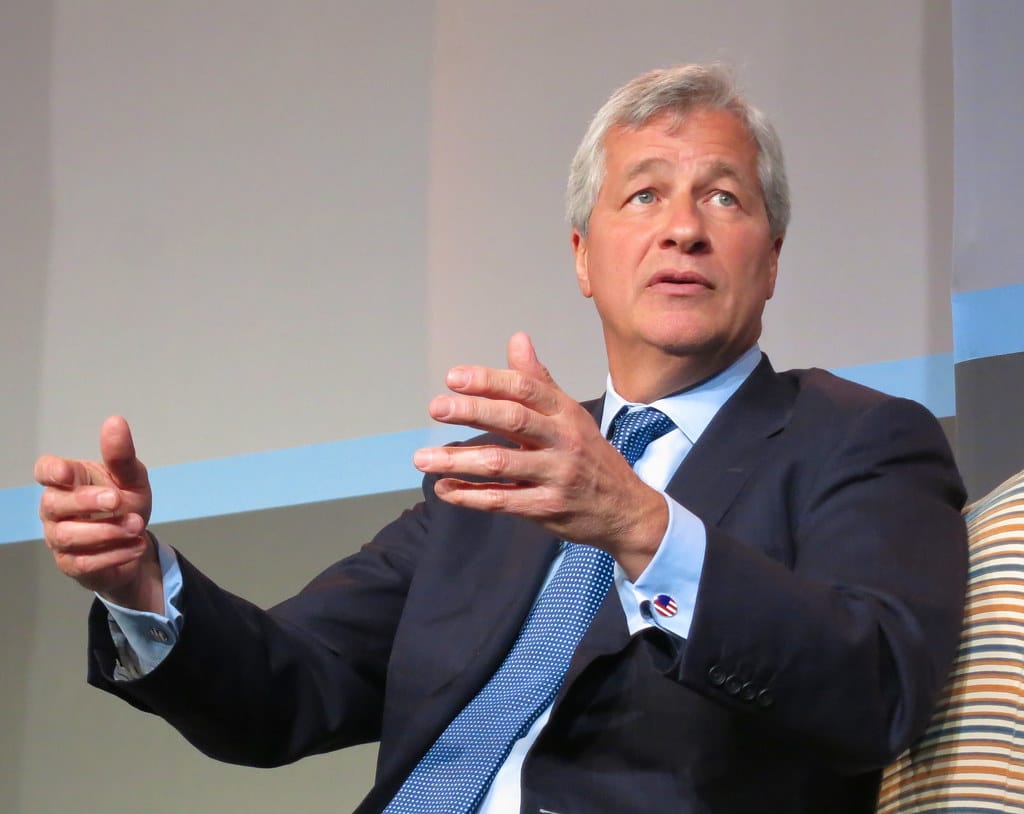
- Top picture: File photo of Jamie Dimon, chief executive of JPMorgan Chase. The picture is illustrative and is not from the earnings call described below. Jamie Dimon, photo: Steve Jurvetson (CC BY 2.0, Flickr) (source)
- File photo of Mark Zuckerberg, chief executive of Meta, the company behind the Muse agent. The picture is illustrative. Mark Zuckerberg, photo: Anthony Quintano (CC BY 2.0, Wikimedia Commons)
