
Data centres were on the ballot in two ways at the 3 November midterms: as a question put to voters leaving the polls, and as dozens of local measures. Both point in the same direction. Neither settles what happens next.
The exit poll
NBC News asked voters whether they would favour or oppose the construction of a new data centre in their community. In its exit poll, 76% said they would oppose it and 24% said they would favour it. NBC says exit polls are not vote results but a look at voters' thinking and motives. It combines in-person interviews on Election Day with mail, phone and online methods to account for early and mail-in voters.
The same poll asked about AI more broadly. Asked whether AI will do more to help society or more to hurt it, 57% said hurt, 24% said help and 18% said neither. On whether AI data centres mattered to their vote for Congress, 23% called them crucial and 33% a major factor. 31% said they were a minor factor and 13% said they were not a factor. For comparison, 49% called the cost of living crucial, 55% government corruption and 34% the war in Iran.
Asked which party would be better able to handle artificial intelligence, 30% said the Democratic Party and 27% the Republican Party. 43% said neither.
The local measures
The Verge's Lauren Feiner reported that voters faced data centre questions directly in 45 local ballot measures nationwide. As of Wednesday morning, according to a site compiled by Redbud Consulting, the results of 33 of them will restrict data centre development. The Verge gave three examples:
- The Town of Wells, Maine, favoured a 180-day moratorium on large data centres, backdated to mid-June 2026.
- Several Ohio cities voted to ban data centres over 25MW.
- El Dorado, Kansas, voted to ban data centres with a peak electrical load over 10MW for 10 years.
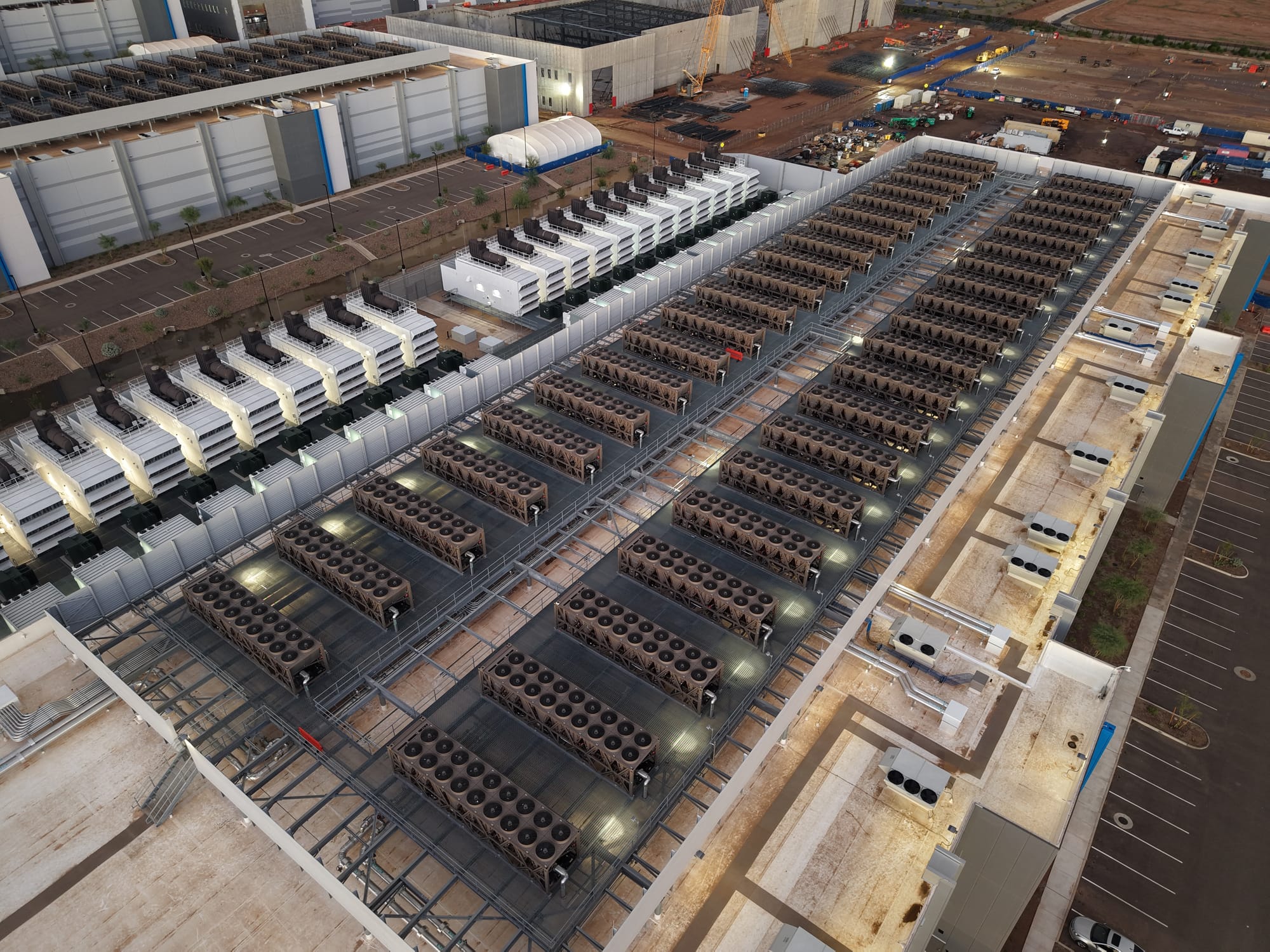
Tom's Hardware, citing the Data Centers on the Ballot tracker, reported that 33 restricting measures had won, with six more leading. It said one measure, in Harwood, North Dakota, which adds an extra review process for industrial projects including data centres, had failed, and five had no posted results. It also noted that the questions varied widely, from permanent bans to moratoriums, time-limited actions and limits based on size or consumption.
CNBC gave two local results. In Ashville, Ohio, residents rejected a resolution that would have approved terms for EdgeConneX to build two data centre buildings on 195 acres. In Joliet Township, Illinois, voters said no to a measure on whether the city council should approve construction of AI data centres.
Jim Bianco of Bianco Research wrote in a post on X, quoted by CNBC: "These are non-binding measures, but given the size of the Democrats' victory, adding Texas governorship, and a 29 to 1 lead to restrict data centers, politicians that want to remain employed as politicians are going to heed these messages."
The candidates
The Verge reported that several winners backed restrictions. Texas's Gina Hinojosa, who takes the governor's seat from Republican incumbent Greg Abbott, supports a statewide moratorium on data centre development. Michigan's Abdul El-Sayed, who won the Senate race over Mike Rogers, has called for a pause on new developments "until we can do it safely and with federal protections", according to The Verge. In Ohio, Sherrod Brown won back a Senate seat from Jon Husted, whom Brown had labelled "the face of data centers", The Verge said. In Nevada, Aaron Ford ousted Governor Joe Lombardo, whom The Verge says Ford had branded "data center Joe".
The Verge was careful about cause. It wrote that it is hard to draw a direct line from data centre backlash to any of these results. Republican Byron Donalds, whom The Verge says previously lauded development in Florida, won the governor's race. In Iowa, The Verge reported, Democrat Rob Sand won while opposing a moratorium that his challenger favoured. The Verge's view was that even these candidates had been forced to engage on the issue and are likely to face continued pressure to put at least some guardrails in place.
CNBC reported that Democrats flipped both chambers of Congress, and that in Texas James Talarico beat Republican Ken Paxton, though Elon Musk funnelled $224 million into Texas. As of early Wednesday morning, CNBC said Democrats were projected to win at least 250 House seats and to hold at least 54 in the Senate. In premarket trading, CNBC reported SpaceX down 3.8% and Tesla down 3.5%. It also said AI stocks came under pressure overnight as Democrats, whom it described as seen as proponents of data centre moratoriums, won big in key data centre hubs. Its headline for that item called AI stocks mixed.
What it does and doesn't tell us
The exit-poll result is one question put to voters, not a vote. The measures are local and differently worded, and Bianco called the ones he was commenting on non-binding. Tom's Hardware wrote that it is unclear whether the votes will affect projects already under way.
My reading is that the 76% figure and the run of local results are hard to dismiss as noise. The sources do not show, though, that data centres decided any statewide race.
Sources
CNBC (2026) 'Midterm elections 2026 live updates: Vance blames Iran war for Republican losses', CNBC, 4 November 2026, available at: https://www.cnbc.com/2026/11/04/2026-midterm-election-results-live-updates.html (Accessed: 4 November 2026).
Feiner, L. (2026) 'Data centers lost the midterms', The Verge, 4 November 2026, available at: https://www.theverge.com/policy/1026365/data-centers-midterms-results (Accessed: 4 November 2026).
Morales, J. (2026) 'AI data centers comprehensively defeated at US midterm elections — 45 measures put on the ballot as Americans overwhelmingly vote against developments', Tom's Hardware, 4 November 2026, available at: https://www.tomshardware.com/tech-industry/data-centers/ai-data-centers-comprehensively-defeated-at-us-midterm-elections-45-measures-put-on-the-ballot-as-americans-overwhelmingly-vote-against-developments (Accessed: 4 November 2026).
NBC News (2026) 'National Exit Polls: Election 2026 Results', NBC News, 3 November 2026, available at: https://www.nbcnews.com/politics/2026-elections/exit-polls (Accessed: 4 November 2026).
