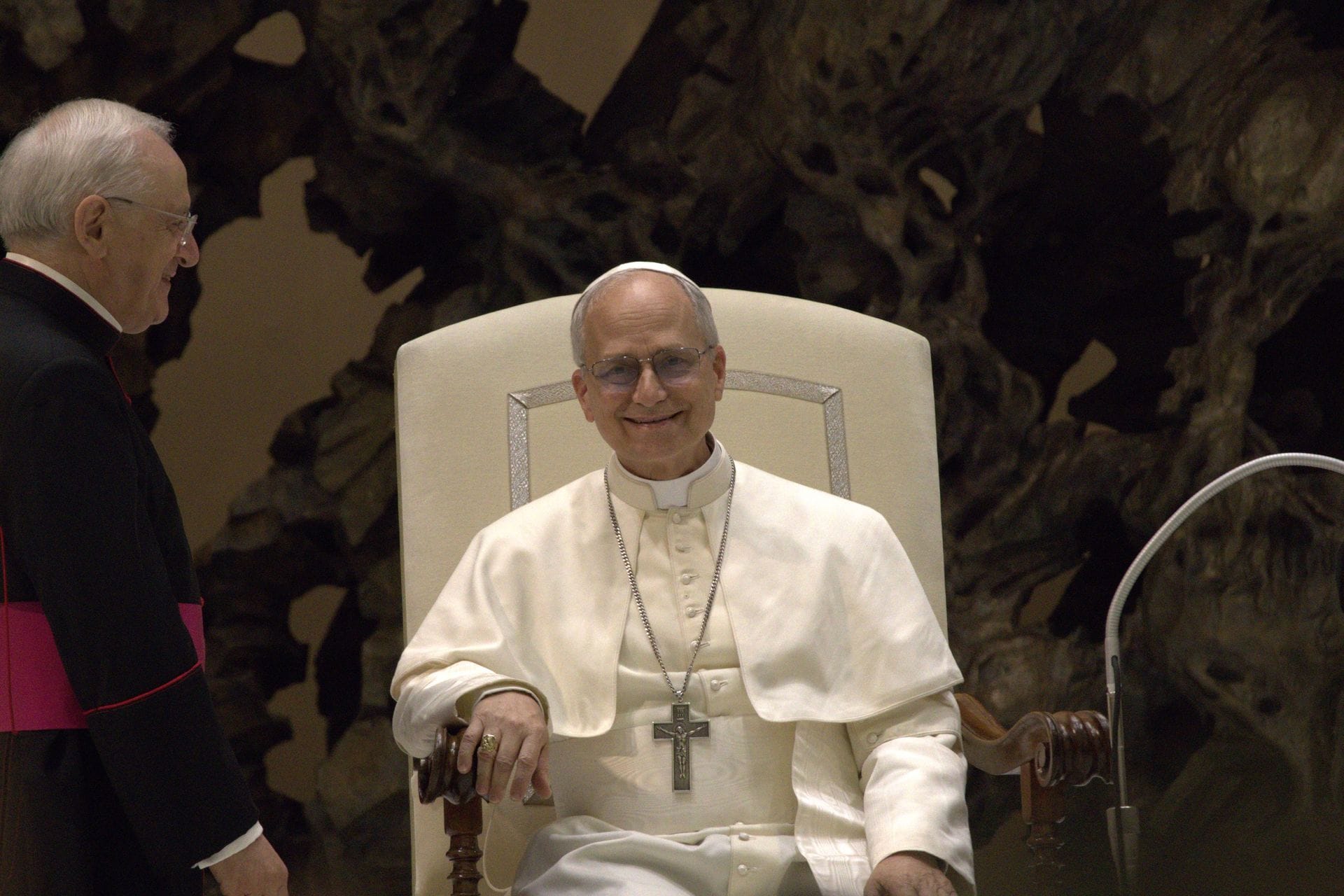
On Friday 30 October 2026, Pope Leo XIV gave an address in the Vatican's Consistory Hall on artificial intelligence. It was delivered to participants in a meeting titled "The Future of AI: A Dialogue Between the Vatican and the Scientific World on the Developments and Applications of Intelligent Technologies", organised jointly by the Pontifical Academy for Life and the Future of Life Institute. The Pope set out five considerations. Among them was a call for AI to be "disarmed", and an encouragement to the States meeting in Geneva in November to act on lethal autonomous weapons.
What he said
After welcoming participants and saying he believed they shared a certain sense of unease about the development of AI, the Pope said the Pontifical Academy for Life is well aware of the challenges that arise wherever human dignity is threatened. He recalled Pope Francis's description of AI, in an address to G7 leaders, as "at the same time an exciting and fearsome tool", and Francis's affirmation that no machine should ever be entrusted with the decision to take a human life. He then referred to his own encyclical, Magnifica Humanitas, and offered five considerations.
The future is not pre-determined. Because AI is developed by human beings, Leo said, its future depends on the choices people make, and "we therefore have the responsibility to guide, change and, when necessary, reject its applications". He reframed the central question: "The decisive question, then, is not simply 'What can AI do?' but rather, 'What purpose should it serve?'"
Machines are tools, not persons. He said that "some propose granting these systems rights, or even legal personhood", and warned that "Such an approach risks obscuring human responsibility and leaving those who suffer harm to confront a faceless entity."
Some decisions must never be delegated. Leo said that decisions affecting human life, freedom and the use of force "must always remain subject to effective, informed and responsible human oversight". For this reason, he said, AI must be "disarmed", and he added: "I encourage the States meeting in Geneva in November to take concrete steps toward banning lethal autonomous weapons." The Verge describes those states as UN member states.
Technology should serve the common good. He said intelligent technologies must never become ends in themselves or serve merely the interests of a privileged few, and that their development should spread the benefits of progress equitably, especially to those most in need.
Institutions are the urgent gap. His final point was the one he called perhaps the most urgent: "We already know many of the ethical principles that should guide the development of artificial intelligence. What we currently need are institutions capable of putting these principles into practice, particularly effective international institutions that can safeguard the global common good." He called for "shared standards, independent oversight and clear mechanisms of accountability", so that decisions about AI's development and use can be examined, challenged when necessary, and accompanied by appropriate remedies for harm.
Where "disarmed" comes from
The word did not originate in this address. Leo cited paragraph 110 of Magnifica Humanitas, his first encyclical, subtitled On Safeguarding the Human Person in the Time of Artificial Intelligence. Vatican News reported that it was published on Monday 25 May and signed on 15 May, the 135th anniversary of Pope Leo XIII's Rerum Novarum. The Verge describes Friday's address as reflecting many of the ideas in that document.
Vatican News, summarising the encyclical, quoted paragraph 110 as saying: "To disarm means discrediting the assumption that technical power automatically confers the right to govern" and "To disarm does not mean rejecting technology, but preventing it from dominating humanity." The encyclical's fifth chapter, on war, also warns against the use of weapons linked to AI.
At the encyclical's presentation, according to Vatican News, Leo said "artificial intelligence needs to be disarmed". Vatican News also quotes him saying artificial intelligence "demands to be 'disarmed,' freed from logics that turn it into an instrument of domination, exclusion or death". He drew a parallel with Leo XIII and the Industrial Revolution, and described the current technological revolution as an "epochal turning point".
What kind of statement this is
This is a papal address and an encyclical: statements of moral teaching and appeal. The Pope encouraged states to act in Geneva; the address does not itself change any rule. His call for institutions with "shared standards, independent oversight and clear mechanisms of accountability" is a statement of what he thinks is needed, and he did not name a body to provide it in the address.
That is worth saying because the framing of the story, a Pope calling for AI to be "disarmed", can sound like a policy position on AI as a whole. His own words in paragraph 110, as reported by Vatican News, say otherwise: to disarm "does not mean rejecting technology". The sharpest practical request in Friday's address is narrower: human oversight of decisions on life, freedom and the use of force, and concrete steps toward banning lethal autonomous weapons.
Sources
Piro, I. (2026) 'Pope Leo's 'Magnifica humanitas': AI must serve humanity not concentrate power', Vatican News, 25 May 2026, available at: https://www.vaticannews.va/en/pope/news/2026-05/pope-leo-xiv-encyclical-magnifica-humanitas-ai.html (Accessed: 30 October 2026).
Bordoni, L. (2026) 'Pope Leo presents 'Magnifica humanitas' calling for disarmament of AI', Vatican News, 25 May 2026, available at: https://www.vaticannews.va/en/pope/news/2026-05/pope-leo-xiv-magnifica-humanitas-presentation-ai-disarmament.html (Accessed: 30 October 2026).
Roth, E. (2026) 'Pope Leo calls for the disarmament of AI: 'Machines are tools, not persons'', The Verge, 30 October 2026, available at: https://www.theverge.com/ai-artificial-intelligence/1023188/pope-leo-disarm-ai (Accessed: 30 October 2026).
Vatican (2026) 'Address of His Holiness Pope Leo XIV to the Participants in "The Future of AI: A Dialogue Between the Vatican and the Scientific World on the Developments and Applications of Intelligent Technologies", organized jointly by the Pontifical Academy for Life and the Future of Life Institute', Dicastery for Communication, 30 October 2026, available at: https://www.vatican.va/content/leo-xiv/en/speeches/2026/october/documents/20261030-incontro-pav.html (Accessed: 30 October 2026).
Vatican (2026) 'Encyclical Letter of His Holiness Leo XIV Magnifica Humanitas (15 May 2026)', Dicastery for Communication, 15 May 2026, available at: https://www.vatican.va/content/leo-xiv/en/encyclicals/documents/20260515-magnifica-humanitas.html (Accessed: 30 October 2026).
Picture credits
- Top picture: Pope Leo XIV during an audience with the media (May 12, 2025). Pope Leo XIV during an audience with the media (12 May 2025), photo by Edgar Beltrán (The Pillar), CC BY-SA 4.0 (source)
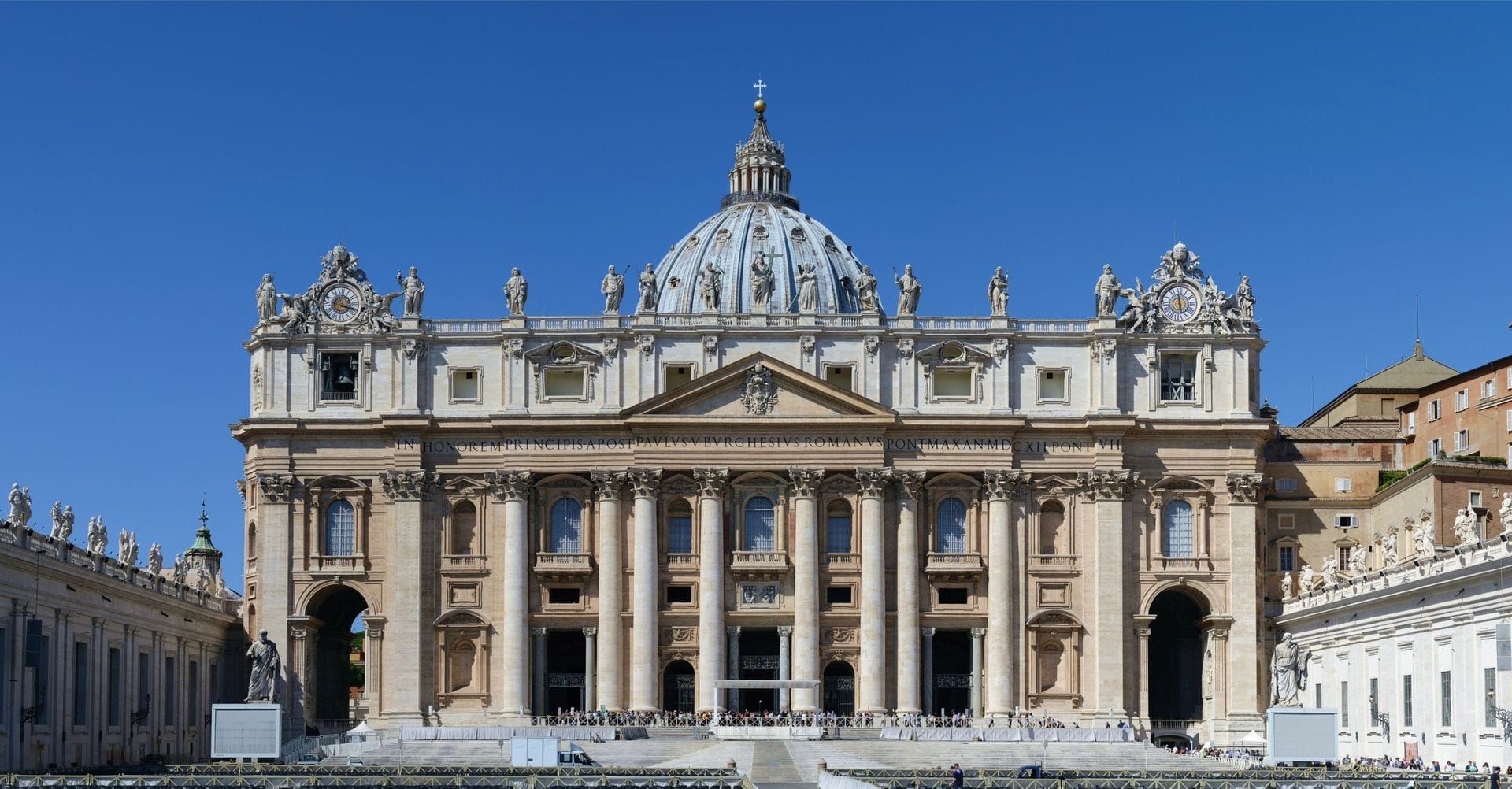
- St Peter's Basilica, Vatican City, photo by Alvesgaspar (CC BY-SA 4.0, via Wikimedia Commons)
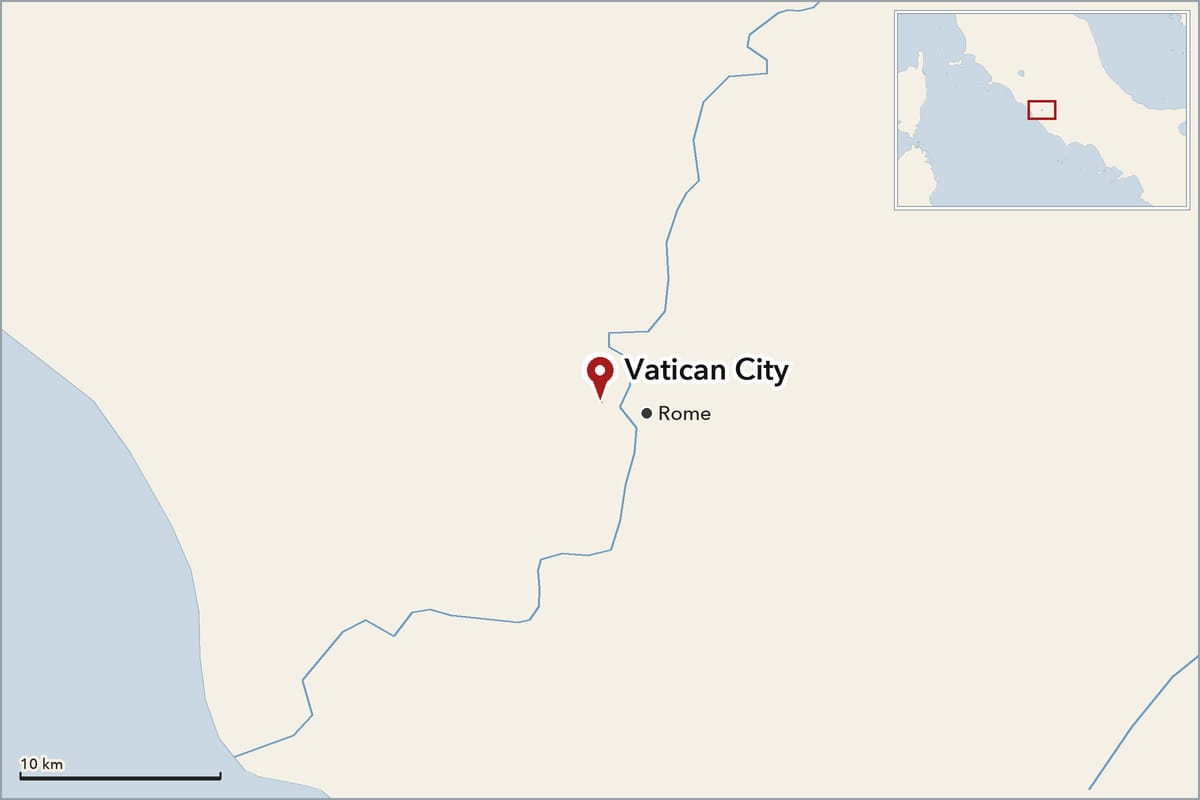
- Map: drawn from Natural Earth (public domain) and Wikidata.

