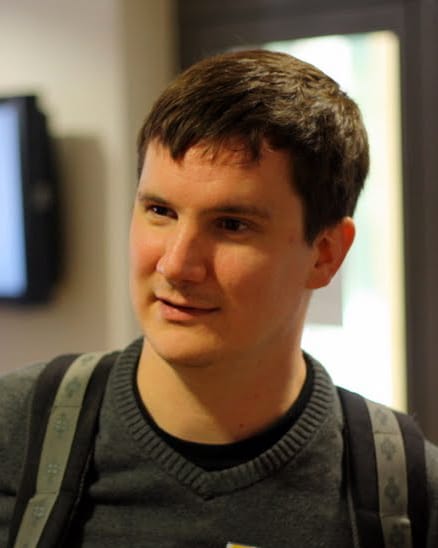
On 26 October 2026, OpenAI said an internal model had refuted the Exponential Time Hypothesis (ETH). Stanford Tech Review reported that, within hours, Anthropic posted its own refutation, written by an internal Claude model, with both labs offering Lean proofs. As of 28 October, Stanford Tech Review reported that neither had yet been accepted by the research community.
What the hypothesis says
ETH states that satisfiability of 3-CNF Boolean formulas (3-SAT) cannot be solved in subexponential time. It was proposed by Russell Impagliazzo and Ramamohan Paturi of UC San Diego in 1999 and elaborated on, with Francis Zane, in 2001. It can be thought of as an even stronger version of P ≠ NP and has been treated as a bedrock tenet of computer science by most experts.

ETH implies P ≠ NP, but the negation of ETH does not imply P = NP. Refuting ETH means showing 3-SAT can be solved in subexponential time. OpenAI's announcement puts the number of papers relying on ETH in the hundreds, according to Stanford Tech Review. Anthropic's paper says a literature search by Claude found more than 800 papers that rely on ETH or hypotheses implying it.
What OpenAI claims
OpenAI's preprint is dated 17 October 2026 and was revised on 25 October. Stanford Tech Review describes it as a 66-page document giving a deterministic algorithm that counts satisfying assignments of any k-CNF formula using polynomial space. According to Stanford Tech Review, OpenAI says the model found the disproof on 16 October and that it was formalized in Lean on 17 October.
The paper's main bound is 2^(O(n·log log n / √log n)), tightening to 2^(O(n / √log n)) for sparse formulas. Stanford Tech Review reported that OpenAI's Lean proof establishes a weaker bound than the paper's abstract claims. It also calculated that, with the unknown hidden constants set to 1, the machine-checked bound only falls below brute force beyond roughly 10^2,390 variables, while noting that the real constants could move that figure by many orders of magnitude. The gap between the checked bound and the headline bound is worth keeping in mind when reading the paper's abstract.
What Anthropic claims
Anthropic's paper, dated 26 October 2026, presents a deterministic algorithm for 3-SAT running in 2^o(n) time, formalized in Lean 4. Stanford Tech Review reported that the paper was committed to GitHub at 03:07 UTC on 27 October, and that its README credits an internal research Claude model and lists Claude as the paper's author. Anthropic says the core algorithm was found on 16 October by an internal Claude research model using 14M output tokens with no human input. The paper notes that, independently and concurrently, an internal model at OpenAI claims to have proven a similar result.
Anthropic claims the same headline bound as OpenAI for counting 3-SAT solutions. Its README says the result is purely asymptotic and says nothing about solving formulas in practice. The README also says Claude Opus 5.5 at high effort can re-derive a weaker statement from a condensed hint: that 3-SAT runs in O(2^(δn)) for every δ > 0, not the sharper bounds.
What Lean does and does not check
Stanford Tech Review explained that Lean verifies a formal statement follows from definitions and axioms, but not that it says what the paper says, and that both labs acknowledge this. Anthropic's README says Lean checks the proofs but no machine checks that the Lean statements match the paper. Latenode described the Anthropic result as still an unreviewed claim, and said the paper and formalization, though public, do not replace outside scrutiny from complexity theorists.
Who is reviewing it
Impagliazzo, Paturi and Ryan Williams are working with OpenAI to perform an independent investigation of the result. OpenAI agreed to make all raw data public and fund a conference, and the three reviewers signed no non-disclosure agreements and are unpaid. In an open letter, they wrote that their involvement should not be taken as certification of the claim. Their first step was an open letter calling for feedback and a discussion of norms around AI contributions.
TechCrunch reported Williams as saying that some parts of OpenAI's proof are "maybe you could say routine", but that "there are two or three alien-looking parts", and that it was these parts that made him think the whole community needs to work on it together. He also said every computer scientist should probably put a little more weight on the plausibility of P = NP, though "one's weight may vary", according to TechCrunch. Stanford Tech Review, quoting The Washington Times, reported Paturi as saying that if it holds up it would be a major advance in understanding the limits of computation.
The wider proof drop
Scientific American reported that OpenAI dropped three massive proofs touching math, physics and computer science. TechCrunch reported that OpenAI structured its releases differently for each of the three disciplines. Scientific American reported that the model remains proprietary and that the prompts, compute time and chain-of-thought outputs have not been made public. It also reported that OpenAI's latest releases contradict the recommendations of the Advisory Group on Mathematics and Artificial Intelligence. TechCrunch reported that Anthropic mathematician Levent Alpöge suggested OpenAI was basing its solutions on pre-existing work, hours before Anthropic released its own refutation.
Sources
Fernholz, T. (2026) 'Frontier AI labs say their models refuted the Exponential Time Hypothesis. What does that mean?', TechCrunch, 27 October 2026, available at: https://techcrunch.com/2026/10/27/frontier-ai-labs-say-their-models-refuted-the-exponential-time-hypothesis-what-does-that-mean/ (Accessed: 6 November 2026).
GitHub (n.d.) 'formal-math/eth/README.md at main · anthropics/formal-math · GitHub', GitHub, available at: https://github.com/anthropics/formal-math/blob/main/eth/README.md (Accessed: 6 November 2026).
Howlett, J. and Hall, P. (2026) 'Dueling proofs from OpenAI and Anthropic astound scientists', Scientific American, 27 October 2026, available at: https://www.scientificamerican.com/article/dueling-proofs-from-openai-and-anthropic-astound-scientists/ (Accessed: 6 November 2026).
Latenode (2026) 'Anthropic posts Claude-linked 3-SAT claim to refute ETH', Latenode, 27 October 2026, available at: https://latenode.com/news/anthropic-posts-claude-linked-3-sat-claim-to-refute-eth (Accessed: 6 November 2026).
raw.githubusercontent.com (n.d.) 'A 2^{o(n)} Time Algorithm for 3-SAT', raw.githubusercontent.com, available at: https://raw.githubusercontent.com/anthropics/formal-math/main/eth/paper.pdf (Accessed: 6 November 2026).
Singh, A. (2026) 'OpenAI, Anthropic Say Exponential Time Hypothesis Is False', Stanford Tech Review, 28 October 2026, available at: https://stanfordtechreview.com/articles/openai-anthropic-exponential-time-hypothesis-false (Accessed: 6 November 2026).
Wikipedia (2010) 'Exponential time hypothesis', Wikipedia, 5 March 2010, available at: https://en.wikipedia.org/wiki/Exponential_time_hypothesis (Accessed: 6 November 2026).
Picture credits
- Top picture: Ryan Williams of MIT is organizing his field's response to the new finding. Ryan Williams at the Dagstuhl seminar 10441, photo by Alexander S. Kulikov, via Wikimedia Commons (CC BY-SA 3.0)
- UC San Diego is home to Impagliazzo and Paturi, who formulated ETH. Geisel Library, UC San Diego — photo by Westxtk, CC BY-SA 4.0, via Wikimedia Commons

