Between July and late September 2026, both OpenAI and Anthropic published lower prices for their models. Most of the price changes are recorded in the companies' own pages. The reasons are a matter of interpretation, and one detailed account comes from Max Woolf, a former BuzzFeed senior data scientist who works with AI and machine-learning tools, in a blog post dated 25 October 2026. His explanations are his own analysis, not statements from either company.
What the companies' pages show
OpenAI's API changelog records these changes:
- 30 July: "GPT-5.6 Luna costs 80% less, while GPT-5.6 Terra costs 20% less," the changelog says.
- 21 August: GPT-5.6 Sol moved to $4 per million input tokens and $20 per million output tokens. OpenAI describes that as 20% lower input pricing and 33% lower output pricing. It says the promotional pricing is available at least through 21 November 2026. Woolf describes the Sol cut as about 20% and says it runs for three months.
- 22 September: GPT-6 Sol launched at $2 input, $0.20 cached input and $10 output, per million tokens. GPT-6 Luna launched at $0.10 input, $0.01 cached input and $0.50 output.
- 29 September: GPT-6.1 Sol launched at $2 input, $0.10 cached input and $10 output. OpenAI describes it as being for complex coding and professional work "at a lower cost than GPT-6 Astra". Woolf notes that the cached price is half that of GPT-6 Sol.
On the same day as the GPT-6 launch, 22 September, Anthropic released Claude Opus 5.5. Its page lists input and output tokens at $4 and $20 per million, which it says is 20% less than Opus 5. Cache reads are $0.20 per million tokens, which it says is 60% less. Anthropic's pricing table puts Opus 5 at $5 input, $25 output and $0.50 for cache reads. Anthropic adds that "Our tests show that at default settings it will cost 40% less than Opus 5 on typical workloads." That figure is Anthropic's own claim about its own model.
Its page also gives a reason: "Opus 5.5 requires less compute to serve than Opus 5, and its pricing reflects that."
Woolf also reports a 1 September Anthropic release, Fable 5.1, which he says cut the cache-read price by 75% against Fable 5, from $1 to $0.25 per million tokens. That date and those figures come from his post.
Why cache prices matter
Woolf argues that cache-read prices matter more than the headline rates. In agentic coding, he writes, cache reads make up 96% to 99% of total token spend, because the cache holds the whole earlier conversation on each turn. Anthropic's page makes a similar point more cautiously, saying cache reads "make up the majority of agentic and coding work costs". On Woolf's figures, a 75% cut to cache reads works out at a 70% to 75% cut in the cost of using the model.
A chart in his post, using data from Vercel's AI model gateway, shows cost per token falling to 43.3% of its April 2026 level. Aggregate spend in that data has kept rising, which Woolf puts down to the models getting better faster than they are getting cheaper.
Woolf's main explanation: competition from cheaper models
Woolf sees what he calls a tit-for-tat between the two companies, and says it is reasonable to assume the cuts are in reaction to each other. But he notes that nobody cuts prices by 80% without some outside pressure, and he looks for it in cheaper rivals.
His case runs like this:
- Models are easy to swap. He says that since last November models have become more of a commodity. He says trying a new one on a codebase takes only a toggle in a coding tool or a different endpoint through OpenRouter, so there is little moat.
- Open-weight models are cheap. He cites DeepSeek's V4.1 Flash, with an updated 1017 variant priced by DeepSeek at $0.15 / $0.60 / $0.003 per million tokens (input, output, cache read). He says it scores 45 on the Artificial Analysis index against 24 for DeepSeek Flash V4. He also says the number of providers hosting it on OpenRouter has grown from 13 for the earlier V4 Flash, which he noted in May, to 29 for the 1017 variant.
- More are arriving. Moonshot AI has announced Kimi K3.1 Pro, which Woolf says has comparable performance to Opus 5.5 at half the input and output price ($2 / $10 / $0.20).
- The July cut may be aimed at them. "I suspect the 80% GPT-5.6 Luna price cut in July was meant to specifically compete with these smaller open-weight models," he writes. That is his suspicion, not OpenAI's stated reason.
Will prices bounce back?
Some critics argue token prices have been held artificially low to attract users and will rise later, likening the labs to Uber and Lyft loss-leading in ride-hailing in the 2010s. Woolf rejects that. He says OpenAI and Anthropic are not a duopoly able to set prices alone, and that many providers can serve similar models at similar quality. He calls the idea of a sudden rise "a fantasy", arguing that it is not supported by behavioural economics or by the actual trend in LLM prices.
He also raises the rumoured stock-market listings. He writes that both companies are rumoured to be heading for IPOs, OpenAI in 2027 and Anthropic within a couple of months. He says leaked financials from both show billions of dollars in losses from research and scaling, though he adds that those reports do not account for the recent growth in agentic use. He notes that cutting the main revenue source seems odd ahead of a prospectus. He then cites "some reports saying the profit-per-token margins are as healthy as 80% with caveats", without naming them.
Woolf also offers a less cynical reading: that serving the models has become more efficient, and that he believes Anthropic's statement about Opus 5.5.
On subscriptions, he reports that OpenAI halved the usage allowance on its $200-a-month Codex tier at the time GPT-6.1 Sol was announced. He also says he cut his own Codex plan to a fifth of its usage limit, because the same work now takes a quarter of the usage.
Where that leaves the story
Most of the price changes are on the record; the motives are a different matter. Apart from Anthropic's line about compute on Opus 5.5, the reasons come from Woolf, and he frames them as suspicion and reasonable assumption. They deserve to be read that way: as a well-argued reading of the market.
Sources
Anthropic (2026) 'Claude Opus 5.5', Anthropic, 22 September 2026, available at: https://www.anthropic.com/claude-opus-5-5 (Accessed: 26 October 2026).
OpenAI (2026) 'Changelog', OpenAI Developers, entries dated 30 July, 21 August, 22 September and 29 September 2026, available at: https://developers.openai.com/api/docs/changelog (Accessed: 26 October 2026).
Woolf, M. (2026) 'OpenAI and Anthropic cut their LLM prices by up to 80% within a few months. Why?', Max Woolf's Blog, 25 October 2026, available at: https://minimaxir.com/2026/10/cheap-llms/ (Accessed: 26 October 2026).
Picture credits
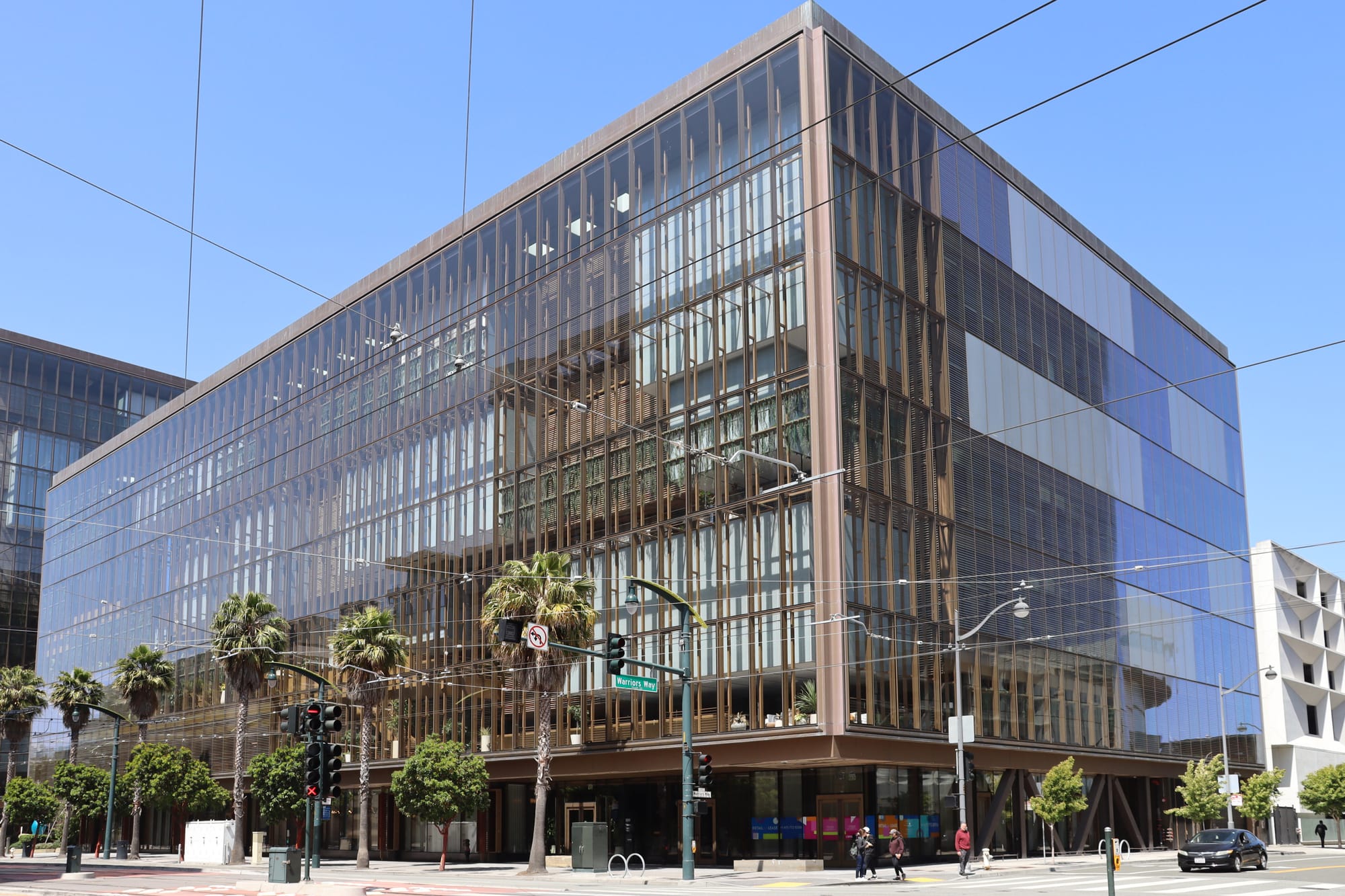
- Top picture: OpenAI's headquarters. Photo: Coolcaesar, via Wikimedia Commons (CC BY 4.0)
