
Meta has paused planned updates to its Commercial Terms, Product Catalog Terms, Self-Serve Ad Terms and Ad Creative Generative AI Terms, meaning the changes will not take effect on 20 November 2026, the company said on Friday, according to Reuters. A Meta spokesperson said: "We're pausing the changes as we continue to engage with stakeholders and take our time to get this right. In the meantime, our existing terms remain in effect." Ars Technica described it as an indefinite delay, coming after weeks of backlash and a failed attempt to quell it.
On the page where the commercial terms announcement used to be, Meta says, according to 404 Media: "These updates are now paused and will not take effect on November 20, 2026." MediaPost, as relayed by AI Weekly, reported that Meta removed the terms link from its Business Help Centre on 5 November.
What the terms would have done
According to 404 Media, the terms would have required business accounts to allow Meta to "use any content from such domains, web pages, or URLs to provide, develop, improve, research, train, and maintain the integrity of" Meta's products. The UK's Competition and Markets Authority (CMA) said the terms could allow Meta to collect content from the websites of businesses and publishers that use its services and use it for its own products and services, including its AI features, without those businesses getting a choice on if or how their content is used. The Rio Times reported that under the terms, continued use of Meta's business products after notice counts as acceptance, and that publishers say there is no way to refuse the crawling clause without leaving the platform.
Ars Technica said the terms even required publishers to create test credentials so Meta's bots could reliably bypass paywalls. Ars Technica, citing Nieman Lab, reported that legal experts warned the vague language could allow Meta to ignore scraping preferences set in robots.txt files and crawl vast amounts of off-Facebook content for AI training. Because virtually every news publisher has a Facebook page, Nieman Lab warned that Meta could potentially avoid millions in licensing fees if the update went ahead as planned, Ars Technica reported.
A date that moved more than once
The terms were initially set to take effect on 30 October, but after outcry from journalists and users, 404 Media reported, Meta announced it was pushing the change to 20 November. The Rio Times dates the first trade-press reports of the terms to 15 October 2026, after which Meta removed the word "train". Nieman Lab reported, as relayed by 404 Media, that Meta limited the permitted uses to "advertising and business products", where previously it said the data would be used for all Meta products.
Andy Stone, Meta's vice president of communications, wrote on X on 28 October: "We care deeply about our partners and do not plan to make policy changes without a full consultation with industry groups and leaders." He added that the consultation "could extend beyond November 20, in which case we’d delay implementation of the updated terms."
Meta told business page owners, in Ars Technica's account, that "our crawling practices remain unchanged, and content owners can continue to signal their crawling preferences using robots.txt." Ars Technica reported that Nieman Lab noted Meta "has not included any specific language about respecting robots.txt preferences in its revised terms of service."
Norway and Brazil
The Rio Times reported that a Norwegian trade body filed for an injunction on behalf of ten media groups on 27 October, and that the Oslo District Court temporarily blocked the terms on 28 October, according to the trade body. The Rio Times said reports do not make clear whether the Norwegian order covers only the claimants or all Norwegian businesses, and that the court had not yet ruled on whether the clauses are valid.
In Brazil, the 44th Civil Court of São Paulo granted a preliminary injunction on Tuesday, 3 November 2026, according to the national newspaper association ANJ. ANJ brought the case with ABERT, which represents radio and television broadcasters, and ANER, which represents magazine publishers; ANJ says the injunction was issued by Judge Guilherme Madeira Dezem.
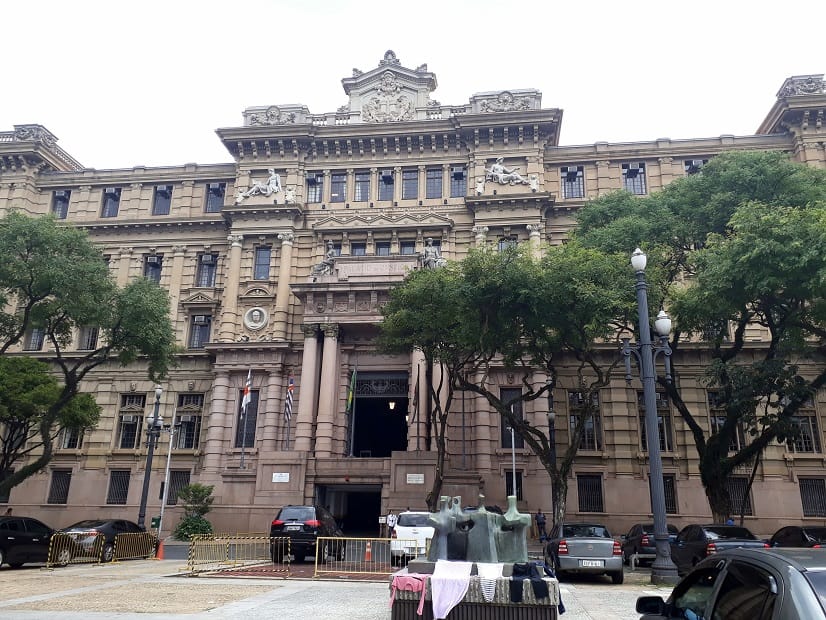
According to ANJ, the decision suspends part of Meta's Commercial Terms and bars the unauthorised collection and use of member outlets' content, including to develop and train artificial intelligence systems. ANJ says the order also requires Meta to keep member outlets' accounts, pages and tools fully working, without blocks, restrictions or penalties for refusing the new conditions. The fine for non-compliance is R$1 million a day, capped at R$100 million, according to ANJ; The Rio Times put that at about US$182,000 a day and US$18.2 million. ANJ says the court pointed to signs of copyright violation and contractual abuse, and that the injunction remains valid until the case receives a final judgment.
ANJ describes the decision as the first known in the world granted to a coalition of media associations against these Meta contract changes. The Rio Times also recalled that in July 2024 Brazil's data protection authority suspended a change to Meta's privacy policy that would have allowed AI training on users' data, and Meta suspended its generative AI features in the country. The Rio Times noted that the earlier case concerned personal data, while this one concerns published journalism and was brought by the media groups themselves.
The UK investigation and political pressure
On 30 October the CMA announced an investigation into whether Meta is abusing a dominant position by imposing exploitative terms on publishers and advertisers. It is using its Competition Act 1998 powers to investigate concerns it has heard from stakeholders including the News Media Association and Movement for an Open Web. The investigation will assess whether Meta holds a dominant position in a relevant market in the UK and, if so, whether its terms amount to an abuse of that position. The CMA said that, as this was only the start of its investigation, no decision had yet been made on whether Meta has broken the law.
In a LinkedIn post quoted by Ars Technica, Theo Bamber, whom Ars identifies as chief executive of the UK's News Media Association, called "the continued arrogance of this company to think everyone will just be OK with its actions" "staggering". "It's saying it can use all the content it scrapes to develop 'any business product'. I mean, come on," he wrote. In the US, Nieman Lab reported, as relayed by Ars Technica, that Sens. Adam Schiff and Marsha Blackburn sent letters asking Mark Zuckerberg to withdraw the terms. The Rio Times, citing trade reports, said the European Publishers Council asked the European Commission in late October to suspend the terms and assess them under EU law.
What a pause does and does not settle
Meta's own wording describes a pause, and Stone's earlier statement allowed that consultation could run past 20 November. The CMA said in its 30 October release that its investigation was at its start. Relevant Audience reported on 7 November that no new date had been set.
Sources
404 Media (2026) 'Everyone Everywhere Hated Meta’s New AI Training Terms. Now, They’re On Pause', 404 Media, 5 November 2026, available at: https://www.404media.co/meta-generative-ai-commercial-terms-on-pause/ (Accessed: 9 November 2026).
AI Weekly (2026) 'Meta Pauses Nov 20 Scraping Terms After Norway, Brazil Rulings', AI Weekly, 6 November 2026, available at: https://aiweekly.co/alerts/meta-pauses-nov-20-scraping-terms-after-norway-brazil-rulings (Accessed: 9 November 2026).
Belanger, A. (2026) '“Does Meta think we can’t read?” Meta abandons sketchy commercial terms update.', Ars Technica, 6 November 2026, available at: https://arstechnica.com/tech-policy/2026/11/does-meta-think-we-cant-read-meta-abandons-sketchy-commercial-terms-update/ (Accessed: 9 November 2026).
Gama, H. (2026) 'Justiça proíbe Meta de usar conteúdo jornalístico sem autorização após ação de ANJ, ABERT e ANER', ANJ, 3 November 2026, available at: https://www.anj.org.br/justica-proibe-meta-de-usar-conteudo-jornalistico-sem-autorizacao-apos-acao-de-anj-abert-e-aner/ (Accessed: 9 November 2026).
Global Banking & Finance Review (2026) 'Meta Halts Planned Commercial Terms Updates, Maintains Current Rules', Global Banking & Finance Review, 6 November 2026, available at: https://www.globalbankingandfinance.com/meta-pauses-planned-terms-updates-keeps-existing-rules-place/ (Accessed: 9 November 2026).
GOV.UK (2026) 'CMA opens investigation into Meta’s commercial terms', GOV.UK, 30 October 2026, available at: https://www.gov.uk/government/news/cma-opens-investigation-into-metas-commercial-terms--2 (Accessed: 9 November 2026).
Petrov, A. (2026) 'Meta AI and News: What Brazil's Court Ruled', The Rio Times, 4 November 2026, available at: https://www.riotimesonline.com/meta-ai-news-brazil-court-ruling-explained/ (Accessed: 9 November 2026).
Relevant Audience (2026) 'Meta pauses new Commercial Terms due 20 November 2026', Relevant Audience, 7 November 2026, available at: https://www.relevantaudience.com/meta/meta-pauses-commercial-terms-20-november-2026/ (Accessed: 9 November 2026).
Picture credits
- Top picture: Meta's offices. Meta HQ, photo: InvadingInvader (CC BY-SA 4.0, Wikimedia Commons)
- The Palácio da Justiça in São Paulo. Palácio da Justiça, São Paulo, photo: Sandra Soster (CC BY-SA 4.0, Wikimedia Commons)

