On Tuesday 20 October 2026, at PyTorch Conference 2026, Google announced that TorchTPU, its native PyTorch stack for Google's TPU chips, is available as open source on GitHub. A day earlier, TechCrunch reported that Amazon Web Services had released TorchNeuron, a native PyTorch backend for its Trainium chips. Both are aimed at the same problem. Code written in PyTorch has long run most easily on Nvidia hardware, and each company wants developers to be able to move that code to its own silicon.
TechCrunch's Google story says PyTorch is, "by some accounts", used by 85% of AI apps, and its Amazon story attributes an 85%-of-apps figure to Amazon; it also says Nvidia's CUDA software has left Nvidia's hardware deeply embedded in the toolkit, "essentially by default". Amazon's own page puts its 85% figure differently: it says 85% of AI researchers and developers write their code in PyTorch.
What Google announced
Google's Cloud blog says TorchTPU lets existing PyTorch workloads run on TPUs "with minimal code changes". It was co-developed with the PyTorch team at Meta. The PyTorch project's own post says the effort started at Google in mid 2025, and that the usual change is switching a device name from "cuda" to "tpu".
The same post is frank about the limits of that. A model does not reach peak TPU performance from that one-line change, it says, because a model's shapes, sharding and operations may be skewed towards a GPU architecture. The claim is that the model should run out of the box, not that it will run at its best.
Google and the PyTorch post also give figures for the project's current state. Both come from the project's authors rather than an outside tester:
- The post says TorchTPU is used in production, for both inference and training, by some of the largest Google Cloud customers.
- It says the team added support for about 450 ATen operations and validated out-of-the-box execution on the 5,000 most downloaded Hugging Face models.
- In its own model-coverage table, the post reports 4,821 of 4,917 models passing without a crash (98%) and 638 of 657 representative architectures matching a GPU baseline numerically (97%).
Meta's Jana van Greunen, Director of PyTorch Engineering, is quoted on Google's blog: "We cannot be constrained by a single hardware architecture."

What Amazon announced
Amazon says TorchNeuron runs existing PyTorch code on Trainium "with a single configuration change and no rewrite". In its description of a side-by-side demonstration, Amazon says its engineers ran the same training script on a conventional chip and on Trainium, and that the model learned the same things at the same rate. That is Amazon's account of Amazon's test.
Accounts of the release timing differ. TechCrunch's 19 October report says AWS released the tool on Monday. Amazon's newsroom page and the PyTorch project's post instead said it would go out as open source under Apache 2.0 at PyTorch Conference North America on 20 October; the PyTorch post added that it would go live then as a public beta. The PyTorch post says it supports Trainium2 and Trainium3.
That post also lists what is not yet there. TorchAO and FP8 are in private beta. Dynamic and symbolic shapes are among the features TorchNeuron chose not to support in the first release. Amazon says it is also contributing changes upstream to PyTorch to remove code that ties the framework to specific chips.
One number, two versions
The Deepgram result appears in two versions. TechCrunch quoted Colin Brace, VP of Technology Software at AWS Annapurna Labs, saying Deepgram is "processing 70% more audio per dollar at production-grade accuracy". The PyTorch project's TorchNeuron post carries a statement from Deepgram's CTO, Adam Sypniewski, who says that "in the benchmarks we evaluated", Trainium "processes about 60% more input audio seconds per dollar than our existing GPU baselines".
These are different figures from different speakers, and the sources do not reconcile them. The customer's version is the lower one, with its benchmark scope stated.
The partner ecosystem
Google says it built TorchTPU integrations with several open-source tools. A vLLM backend was developed in partnership with Inferact, and an SGLang backend in partnership with RadixArk. Google also names Hugging Face, Ray, TorchTitan and llm-d. It says a TPU agent suite is in early preview on GitHub, and that LiteRT, its on-device inference tool, joins the PyTorch ecosystem. Amazon says Hugging Face has enabled native Trainium support, that TorchNeuron integrates with TorchTitan, and that it made a major open-source contribution to vLLM.
What it adds up to
TechCrunch notes that PyTorch users can already port apps to AMD GPUs or Apple's chips with a simple configuration change, so portability is not new. What is new is two large cloud providers each shipping an official backend for their own chips in the same week, with their own performance and migration claims.
Most of the figures in these announcements come from the companies or their customers; the TorchTPU post does cite one benchmark it calls independent, a SemiAnalysis inference evaluation of the vLLM-TorchTPU stack. The 85% adoption figure and the Deepgram numbers come from Amazon, its customer or its press coverage. The coverage figures, production use and demonstrations come from the teams that built the software. TechCrunch's own caveat is fair: none of this means developers will automatically ditch Nvidia's hardware. Whether the backends hold up across real workloads will show up in developers' own results.
Sources
Amazon News (2026) 'Amazon opens its AWS Trainium AI chips to every PyTorch developer, no rewrite needed', Amazon News, 19 October 2026, available at: https://www.aboutamazon.com/news/innovation-at-amazon/torchneuron-pytorch-aws-trainium-chips-ai (Accessed: 21 October 2026).
Bort, J. (2026) 'Amazon is taking its biggest shot at Nvidia yet with new TorchNeuron dev tool', TechCrunch, 19 October 2026, available at: https://techcrunch.com/2026/10/19/amazon-is-taking-its-biggest-shot-at-nvidia-yet-with-new-torchneuron-dev-tool/ (Accessed: 21 October 2026).
Bort, J. (2026) 'Google has joined Amazon in attacking Nvidia's stronghold with AI app developers', TechCrunch, 20 October 2026, available at: https://techcrunch.com/2026/10/20/google-has-joined-amazon-in-attacking-nvidias-stronghold-with-ai-app-developers/ (Accessed: 21 October 2026).
Lohmeyer, M. and Jia, B. (2026) 'TorchTPU is now open source: Run native PyTorch on TPUs', Google Cloud Blog, 20 October 2026, available at: https://cloud.google.com/blog/topics/ai-infrastructure/torchtpu-is-now-open-source-run-native-pytorch-on-tpus (Accessed: 21 October 2026).
PyTorch (2026) 'Introducing TorchNeuron: Native PyTorch backend for AWS Trainium', PyTorch, 19 October 2026, available at: https://pytorch.org/blog/introducing-torchneuron-native-pytorch-backend-for-aws-trainium/ (Accessed: 21 October 2026).
PyTorch (2026) 'Introducing TorchTPU', PyTorch, 20 October 2026, available at: https://pytorch.org/blog/introducing-torchtpu/ (Accessed: 21 October 2026).
Picture credits
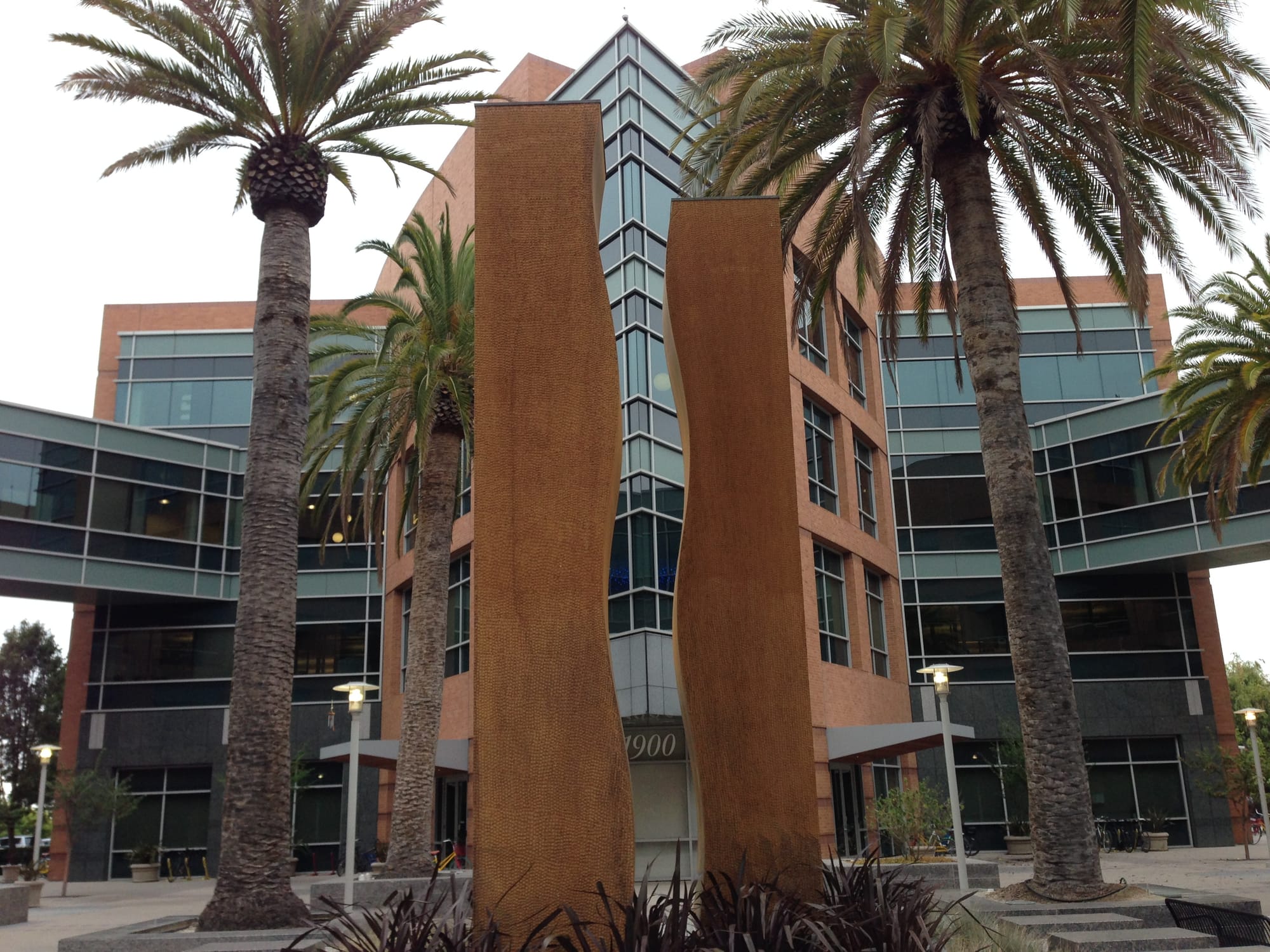
- Top picture: Google's headquarters. Google Building 1900, Mountain View — photo: Runner1928, CC BY-SA 3.0 (Wikimedia Commons)
- The Amazon Spheres on Amazon's headquarters campus in Seattle. Amazon Spheres, Seattle — photo: Andy Li, CC0 (Wikimedia Commons)

