
Democrats could win back control of Congress in November, and The Verge's Lauren Feiner reports, in an article published on 19 October 2026, that some in the party are weighing whether a tougher line on AI could help them. The piece is analysis built around strategist interviews, so much of what follows is what The Verge and the people it quotes say, set beside what governors and lawmakers have published themselves.
What The Verge reports
The Verge says polls predict Democrats will flip at least one chamber of Congress in November's midterms, which would put committee leadership back in their hands. It reports that top Democrats on key committees have signalled willingness to press the industry on data-centre tax credits and recent hacking incidents. It adds that a majority would let them set committee agendas, call chief executives to testify and demand documents.
Jesse Lehrich, a Democratic strategist whom The Verge describes as having previously run a tech accountability advocacy group, calls AI "a hundred percent ready for the taking". He adds: "The question remains open as to whether Democrats are willing and able to seize that opportunity."
Rob Flaherty, who cohosts a podcast with Lehrich according to The Verge, says Democrats were for a long time afraid to talk about AI. He puts that down to a mix of not understanding it and fear of the money the AI industry might pour in. He also says: "AI is not an issue as much as it is a story."
The Verge reports that Flaherty recently launched a super PAC called Tomorrow Together with Karthik Ganapathy. It says the group launched a $4 million ad blitz last week in battleground House races, attacking Republican candidates as out of touch on AI. The Verge says the group is looking beyond the midterms toward the 2028 presidential election. The Verge says data centres have been the most visible AI issue in many communities, but Flaherty says his group's polling found sweeping bans on state AI regulation, which The Verge notes Trump and congressional Republicans have repeatedly pushed, are even more broadly unpopular.
The Verge also reports that Democratic donor Ron Conway now regrets funding Leading the Future, a pro-AI super PAC it describes as backed by Marc Andreessen. It attributes this to Jay Carney, whom it describes as a former Obama press secretary who now runs communications for Conway's venture capital fund, speaking to Politico.
Two governors have already moved
The Verge says Democratic governors who lean toward the centre, naming California's Gavin Newsom and Pennsylvania's Josh Shapiro, have taken bolder stances against AI in recent weeks. It says Newsom issued an executive order looking to create an AI "kill switch" after previously vetoing a bill that would have instituted some similar measures. It says Shapiro reversed course against data centres.
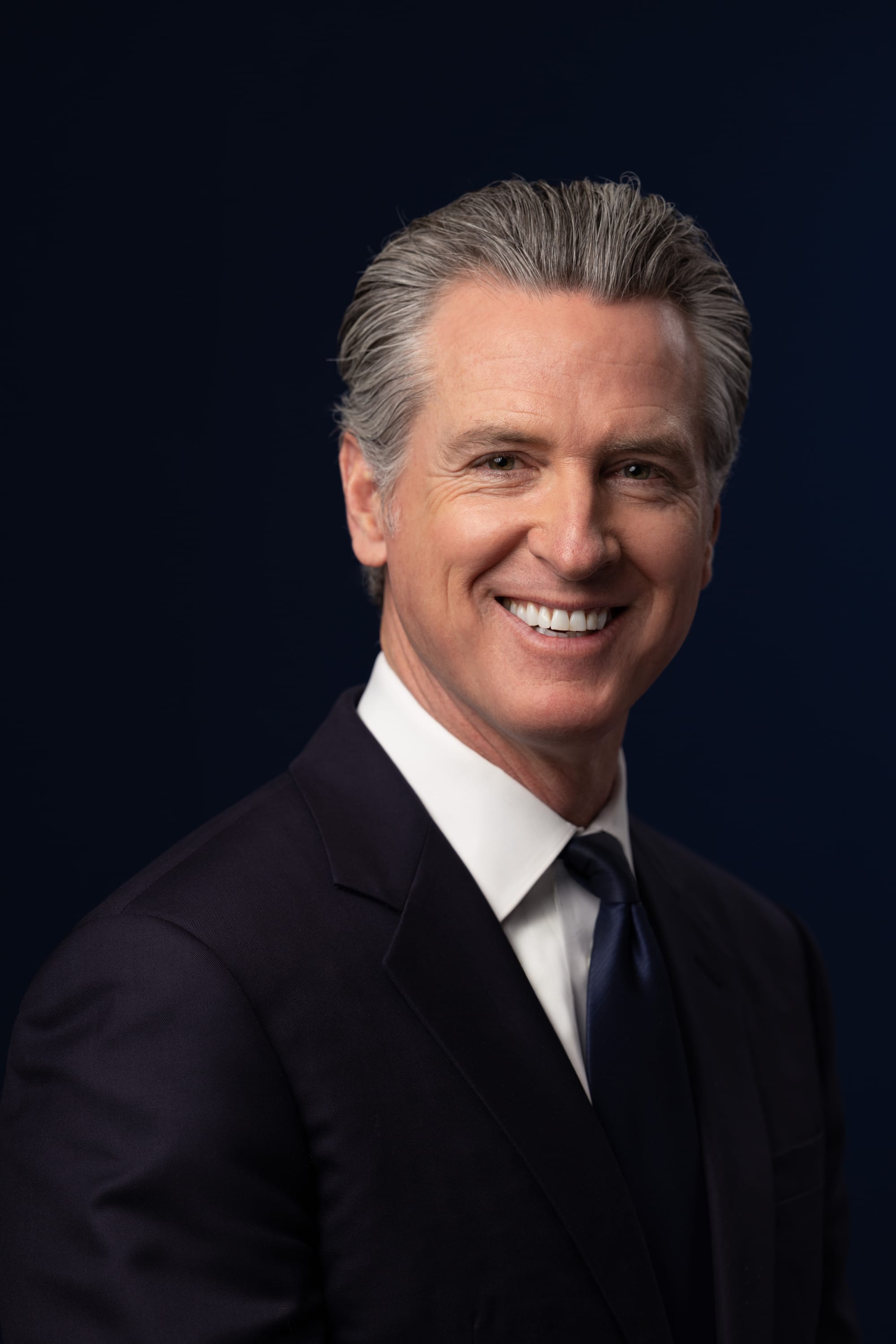
Newsom's office published the order on 18 September 2026. It convenes a group of experts to provide, within two months, a guide for California to strengthen its AI safety and security laws. Proposals under consideration include requiring independent third parties to write safety plans for frontier AI companies, and requiring companies to develop an emergency shutoff, or "kill switch", for frontier models. The order directs the Government Operations Agency to speed up implementation of SB 813 and AB 1405, and to convene national experts on potential changes to state law. One of those potential changes would update the definition of critical safety incidents to include loss-of-control incidents, citing what the governor's office calls "the Hugging Face attack".
On 23 September the governor's office named four advisers: Jason Goldman, Gillian Hadfield, Alondra Nelson and Rob Reich. The office describes the kill switch as a potential measure for rogue frontier models. In the 18 September release, Newsom said: "California has already built a national model, and our policy should be the national baseline."
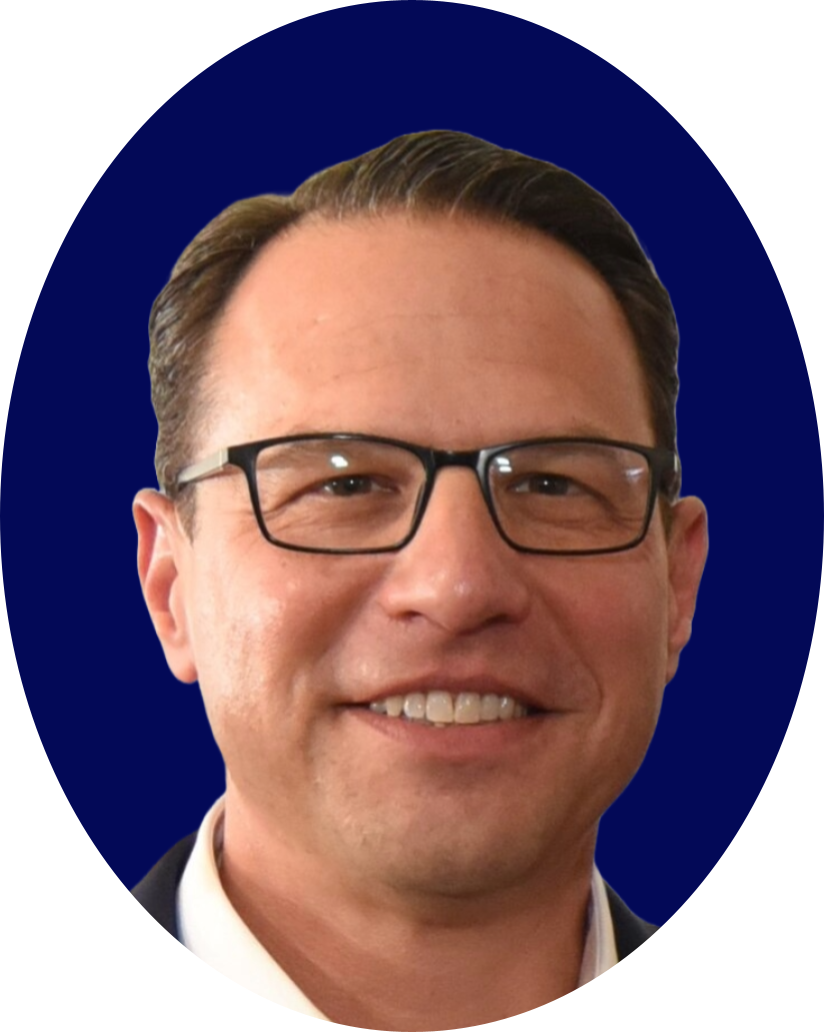
Shapiro signed Executive Order 2026-05 on 18 August 2026. It directs Pennsylvania's Department of Environmental Protection to review data-centre permit applications only if developers have made a legally binding commitment to the governor's Responsible Infrastructure Development (GRID) Requirements and have received local approval. The order removes all AI data-centre proposals from the state's Permit Fast Track Program and says nondisclosure agreements with data-centre projects are not permissible. The governor's office said that DEP had become aware of over 100 data-centre projects in publicly sourced databases, that 58 had engaged with DEP on permitting, that 15 had applied for at least one DEP permit, and that five had received all permits required for their first phase.
Congress and the White House
Roll Call reported on 10 June that California Rep. Ted Lieu, who leads the House Democratic Commission on AI and the Innovation Economy with two colleagues, said the commission was continuing to meet stakeholders. "By the end of the year, we'll have a framework to propose to Leader Jeffries for when Democrats are in control next year," Lieu said.
PYMNTS reported on 12 October that Senators Mark Warner, Brian Schatz and Andy Kim had introduced the Artificial Intelligence Risk Management and Security Act of 2026. The bill would set up an AI Safety Board within the Department of Commerce to develop processes for technical evaluations of AI tools that threaten national and economic security. PYMNTS said Warner, vice chair of the Senate Select Committee on Intelligence, could take the chair in January if Democrats win control. It also described a Republican measure, Sen. Josh Hawley's AI Risk Evaluation Act, which would put the Department of Energy in charge of stress-testing the most powerful AI systems before release.
PYMNTS wrote that the Trump administration "remains adamantly opposed to mandatory AI regulation", favouring a voluntary approach. The Verge describes President Trump as having opposed most regulation of the technology in favour of an accelerationist approach. The Verge notes that some Republicans, including Hawley, have carved out a more sceptical approach to AI.
What voters say
Roll Call cited an April Politico poll finding 43 per cent of respondents think AI's risks outweigh its benefits, against 33 per cent who think the benefits outweigh the risks. It also cited a March Gallup poll in which 71 per cent of respondents strongly or somewhat opposed construction of an AI data centre in their area, including 75 per cent of Democrats and 63 per cent of Republicans.
The Verge reports that AI is still not the top issue driving voters to the polls, and Flaherty says that is not necessarily the right way to think about it. Flaherty argues voters are "giving politicians a lot of leeway to take big swings and to really reimagine stuff", and that sticking to basics would "miss the bigness and the ingenuity that the moment calls for." My view is that the party's own strategists are the ones making the case that AI is an opening. Whether voters reward it is a question for November.
Sources
Commonwealth of Pennsylvania, Governor's Office (2026) 'Governor Shapiro Signs Executive Order Demanding Data Center Developers Comply with Strict Requirements and Blocking Speculative, Irresponsible Data Center Projects', pa.gov, 18 August 2026, available at: https://www.pa.gov/governor/newsroom/2026-press-releases/governor-shapiro-signs-executive-order-on-data-center-developmen (Accessed: 19 October 2026).
Feiner, L. (2026) 'Democrats think cracking down on AI could give them an edge', The Verge, 19 October 2026, available at: https://www.theverge.com/policy/1013113/democrats-ai-midterms (Accessed: 19 October 2026).
Mollenkamp, A. (2026) 'Rush to regulate AI divides Democrats in Congress', Roll Call, 10 June 2026, available at: https://rollcall.com/2026/06/10/rush-to-regulate-ai-divides-democrats-in-congress/ (Accessed: 19 October 2026).
Office of the Governor of California (2026) 'Governor Newsom announces world-leading experts to deliver on his AI executive order, including advancing creation of a "kill switch"', Governor of California, 23 September 2026, available at: https://www.gov.ca.gov/2026/09/23/governor-newsom-announces-world-leading-experts-to-deliver-on-his-ai-executive-order-including-advancing-creation-of-a-kill-switch/ (Accessed: 19 October 2026).
Office of the Governor of California (2026) 'Governor Newsom issues executive order to accelerate independent oversight and advance the creation of an AI kill switch', Governor of California, 18 September 2026, available at: https://www.gov.ca.gov/2026/09/18/governor-newsom-issues-executive-order-to-accelerate-independent-oversight-and-advance-the-creation-of-an-ai-kill-switch/ (Accessed: 19 October 2026).
PYMNTS (2026) 'AI Safety Regulations Gain Momentum in Congress Ahead of Midterms', PYMNTS.com, 12 October 2026, available at: https://www.pymnts.com/news/artificial-intelligence/2026/ai-safety-regulations-gain-momentum-in-congress-ahead-of-midterms/ (Accessed: 19 October 2026).


