
Halo in a web browser, Wind Waker on the iPhone, Super Smash Bros. in mixed reality: The Verge's Andrew Webster opens his 23 October piece with that list. He writes that over the past month or so, projects like these have gone viral "with incredible frequency thanks to new AI tools". The same piece reports a cost. One site that tracked the hobby has stepped back, and its owner says the community behind it has been broken.
What decomps and recomps are
The Verge defines decomps and recomps as a form of reverse engineering. A game is broken down to its building blocks, then rebuilt so it can run on hardware it was never intended for. Done by hand, it is slow work: the Verge notes that a group spent years decompiling the original Animal Crossing on the GameCube.
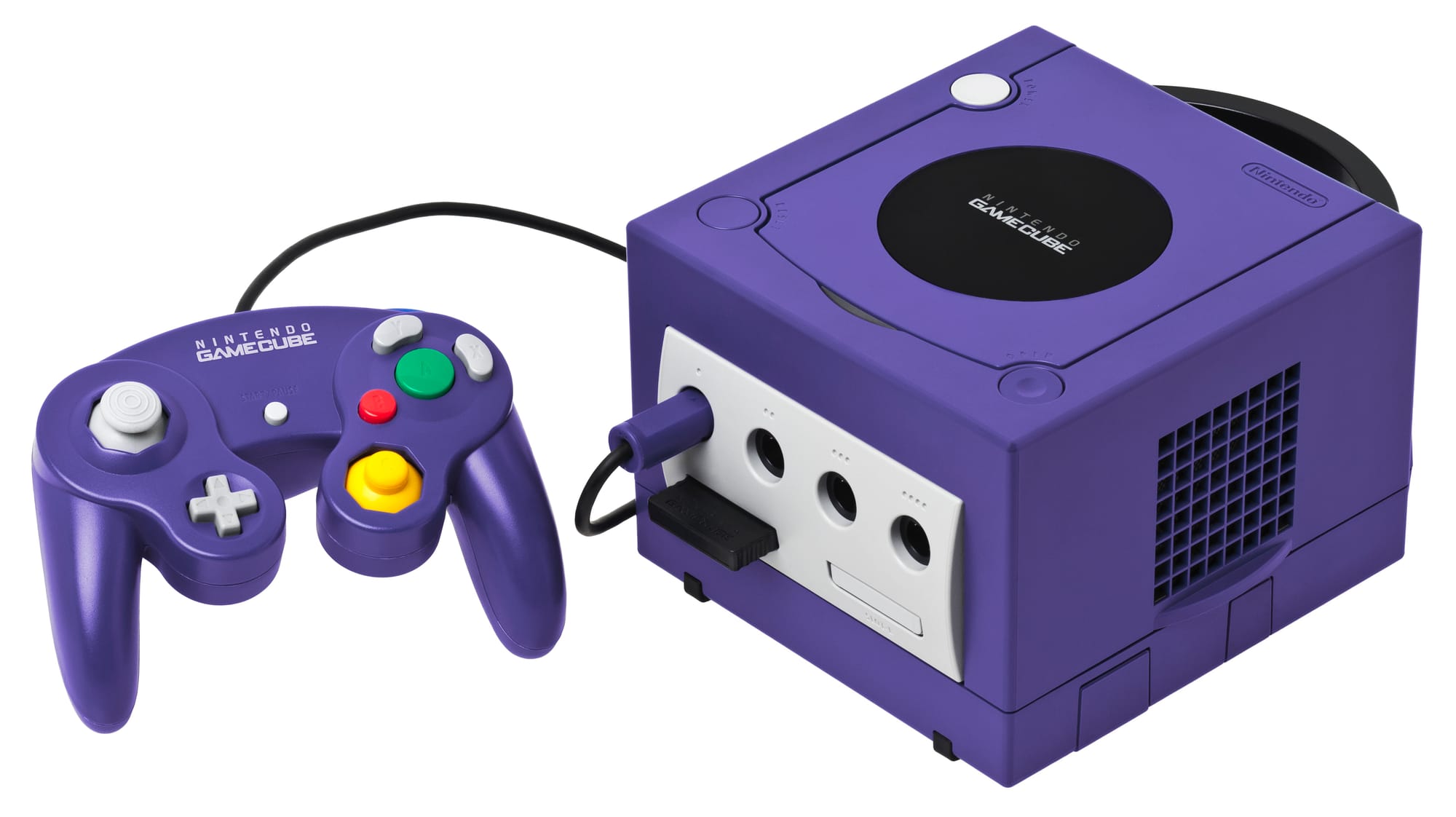
The Verge says AI coding tools have cut that timeline significantly and that the number of ports has grown dramatically in recent months. One hobbyist it quotes is Chris Sotraidis, an AI consultant who works on game ports as a hobby. He set out to make a handful of ports, including a mobile port of The Legend of Zelda: Ocarina of Time from an existing community-built decomp. Within a few weeks, the Verge says, he was working on a dozen projects.
Sotraidis told the Verge that some of those ports "would have been possible with minimal AI assistance if I'd had significantly more time". He added: "But I'm honest enough to say that the pace and volume would not have been possible for me without it."
What decomp.dev said
decomp.dev was created in 2024, in its owner's words, as a way to centralize matching decompilation progress. The owner writes as @encounter, and the Verge and 404 Media call them Encounter. Tom's Hardware reports that they are a GitHub maintainer of decomp-toolkit and objdiff.
The site's statement is titled "Sunsetting decomp.dev". It gives the owner's account of how AI changed the work:
- Early 2026. With the release of Opus 4.6 and GPT-5.4, the statement says, the models appeared to know the community's specific tools without explicit guidance. Their results still needed significant human cleanup, and the cost per task was prohibitively expensive relative to the results.
- Since then. The statement says recent models, naming GPT-6-Astra, are significantly better at following complex directions and writing natural code with enough guidance. It also calls them exceptionally good permuters and says they can work across long tasks without going off the rails.
- The conclusion. The owner writes that, with the right guidance, human input and code reviews, AI can expedite decompilation "in a significant way". The statement then says "the community aspect of decompilation has been broken".
All of this is the site owner's account.
The statement blames what it calls bad actors, in three ways:
- Hostile forks. People fork existing decompilation projects to "finish" them with AI. The owner says this puts little to no effort into contributing to those projects.
- Racing to port. People race to port games, especially from decompilations they did not contribute to, and opportunists have frequently raced to release half-baked, barely functional ports.
- Blurred meanings. Decompilation and ports have been conflated. The owner says decompilation is primarily for research, and that "Sloptubers" and subreddits like /r/decomps have done immense damage by using "decomp" to mean "PC port".
The owner adds that the site was designed to gamify decompilation and says that idea has since warped decompilation into "a hollow numbers game". In the owner's view, a public index and leaderboard is now causing more harm than good.
The statement does not blame AI as such. In a section headed "Why not just forbid AI-assisted projects?", the owner writes that they have long held that "AI is not the issue by itself". They add that, as a sole hobbyist, they lack the energy or desire to define what makes a good decompilation and enforce that across the hundreds of projects on the site.
Shut down, or sunsetting?
decomp.dev is sunsetting its public index and leaderboard — it will no longer accept new projects or show the main index, but will keep tracking existing projects and serving their pages and historical data.
Tom's Hardware, writing on 17 October, described the same scope. Existing projects, including Super Smash Bros. Melee and Animal Crossing at 100% on its chart, would keep reporting, and their pages and history would remain. No new projects could join. The statement also says the site's code has never had an open source licence, and that replicas must not use it in any form.
404 Media reported on Thursday 15 October that the site had made its announcement that day.
Two views of the same shift
The Verge describes a divide. Preservationists are disillusioned by the prevalence of what it calls slop, and the AI side is excited by the possibilities. It also argues that AI-driven ports can be a problem for preservation, because the understanding gained by pulling a game apart is lost when AI does the work.
Sotraidis takes the other side of that argument. He told the Verge he thinks "a lot of what gets dismissed as slop today can improve as the tools get better and people learn to use them well", and that this "doesn't make the current criticisms invalid".
Xbox Labs
Two days before the decomp.dev announcement, Xbox put its own weight behind this activity. On 13 October, Xbox CEO Asha Sharma sent a message to Team Xbox employees globally, published on Xbox Wire, announcing Xbox Labs.
Sharma wrote that in recent weeks games had been "rapidly decompiled and rebuilt to run on hardware they were never originally designed to support". She wrote that making great games easier to access, giving old games new life and allowing more players to become creators and co-creators are "unmistakably good outcomes for players, even when (and sometimes because) they challenge our existing business models". Xbox Labs, she wrote, is "a small group of game makers, engineers and scientists whose job is to turn emerging ideas into things our players and developers can experience". She also wrote that Xbox's priorities are not changing.
Insider Gaming reported that the division is headed by Xbox CTO Scott Van Vliet. As of 23 October, The Verge wrote that the only thing the division had teased was an experimental dashboard.
A hobbyist site retired its leaderboard over AI-assisted ports, and a platform holder opened a lab to explore the same wave of projects, two days apart. The people quoted on each side give different reasons for what they are doing.
Sources
Downing, S. (2026) 'Game decompilation hub freezes leaderboard after AI turns progress into a hollow numbers game amid explosion of 'AI slop' — creator blames forks that use AI to 'finish' other teams' projects and races to ship rough PC ports', Tom's Hardware, 17 October 2026, available at: https://www.tomshardware.com/video-games/retro-gaming/game-decompilation-tracker-decomp-dev-shuts-its-public-leaderboard-saying-ai-has-broken-the-community-its-creator-blames-forks-that-use-ai-to-finish-other-teams-projects-and-races-to-ship-rough-pc-ports (Accessed: 23 October 2026).
Encounter (@encounter) (2026) 'Sunsetting decomp.dev', decomp.dev, available at: https://decomp.dev/ (Accessed: 23 October 2026).
Henderson, T. (2026) 'Xbox Announces 'Xbox Labs', a New Xbox Division to "Explore New Technology"', Insider Gaming, 13 October 2026, available at: https://insider-gaming.com/xbox-labs-announced/ (Accessed: 23 October 2026).
Koebler, J. (2026) 'Video Game Reverse Engineering Community Shuts Down Because AI Has Made It Too Easy', 404 Media, 15 October 2026, available at: https://www.404media.co/video-game-reverse-engineering-community-shuts-down-because-ai-has-made-it-too-easy/ (Accessed: 23 October 2026).
Sharma, A. (2026) 'Introducing XBOX LABS', Xbox Wire, 13 October 2026, available at: https://news.xbox.com/en-us/2026/10/13/introducing-xbox-labs/ (Accessed: 23 October 2026).
Webster, A. (2026) 'Retro gaming is being overrun with AI', The Verge, 23 October 2026, available at: https://www.theverge.com/ai-artificial-intelligence/1015430/ai-retro-games-decomp-recomp-port (Accessed: 23 October 2026).
Picture credits
- Top picture: Asha Sharma, Xbox CEO. Asha Sharma, Xbox CEO, at the 2026 Xbox Showcase — photo: Jason Lewis (CC0, Wikimedia Commons)
- A GameCube console. Nintendo GameCube — photo: Evan-Amos (public domain, Wikimedia Commons)

