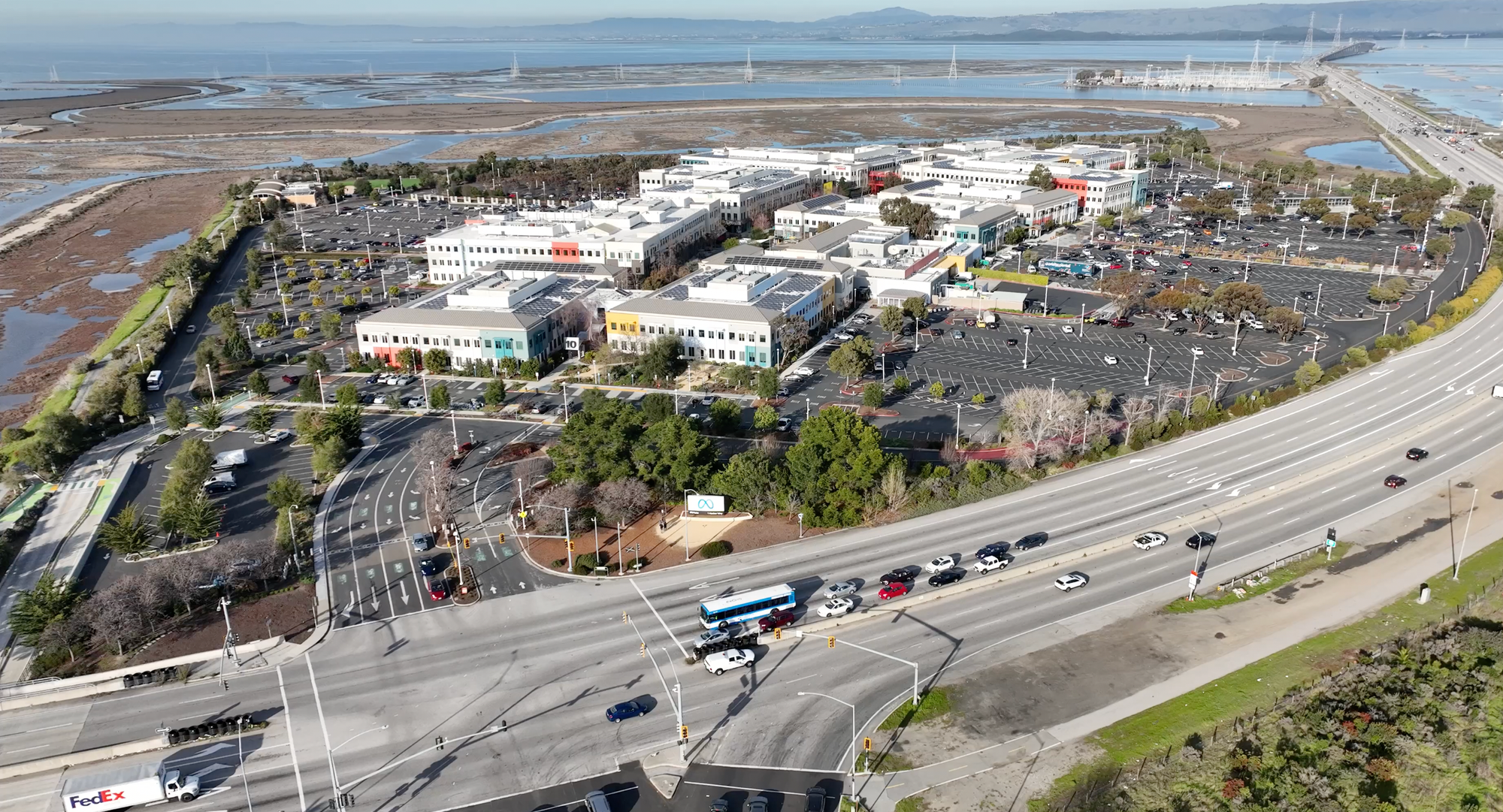
On 30 October 2026 the UK's Competition and Markets Authority (CMA) opened an investigation into whether Meta's commercial terms for businesses using its platforms and services breach competition law. The regulator has made no finding. It says no decision has yet been made on whether Meta has broken the law, and that no assumption should be made that it has.
The terms in question were due to take effect on 30 October. Meta delayed them to 20 November and then, on 28 October according to the CMA, paused the rollout pending a consultation with industry groups.
What the CMA is looking at
The CMA says the terms "could allow" Meta to collect content from the websites of businesses and publishers that use its services. Meta could then use that content to develop and provide its own products and services, including its AI features. The CMA says this could happen without those businesses getting a choice on whether or how their content is used.

The CMA says it is using its Competition Act 1998 powers so it can urgently investigate concerns it has heard from stakeholders including the News Media Association and the Movement for an Open Web (MOW). The investigation will first assess whether Meta holds a dominant position in a relevant UK market. If so, it will assess whether the terms amount to an abuse of that position. The CMA's case page lists the businesses under investigation as Meta Platforms, Inc., Facebook UK Limited and Facebook Ireland Limited. Its timetable gives "October 2026 to January 2027" for rapid initial information gathering and engagement with Meta and third parties, and says the dates are indicative and may change.
Sarah Cardell, the CMA's chief executive, said: "We will be working to reach a swift and satisfactory resolution to this case."
Meta told Reuters there were "no grounds" for an investigation. A spokesperson said: "We've already committed not to change our terms without consulting publishers and other stakeholders. We welcome the opportunity to explain our approach to the CMA."
The CMA also said it is separately seeking information from Meta on its new Meta One business subscription service and on the concerns raised by the Federation of Small Businesses about the potential impact on small businesses of posting external links on Facebook and Instagram without paying a subscription fee. It says those issues fall outside the scope of the new investigation and that no decision has been taken on formal action.
The CMA added that Meta has not been designated with strategic market status under the digital markets competition regime, and that the next set of proposals for such designations is due before the CMA Board in spring 2027.
How the dispute began
According to POLITICO, the row began in the US when Nieman Lab, a journalism research outlet at Harvard, reported on the terms after a tip from a small business owner. The Next Web dates that report to 15 October.
POLITICO reported that Nieman Lab concluded that, as first written, the terms let Meta send automated programs to copy websites linked to business accounts and use the material to "train" its products. It reported that there was no opt-out, and that a business which kept using Meta's tools after 30 October would be deemed to have consented.
Meta communications chief Andy Stone responded on X that the report was "false". POLITICO reported that Stone said the update was aimed at letting Meta pull accurate product information from shopping sites for ads, not at scraping news sites. Meta later revised the terms and deleted the word "train", saying they cover only its advertising and business products.
Publishers were not satisfied. POLITICO reported that the European Publishers Council's letter says Meta had given verbal assurances that publishers could keep using its tools without surrendering their content to AI, but that the terms themselves do not guarantee it. Jason Kint, who heads the US publisher group Digital Content Next, called Meta's correction "a farce".
The complaints
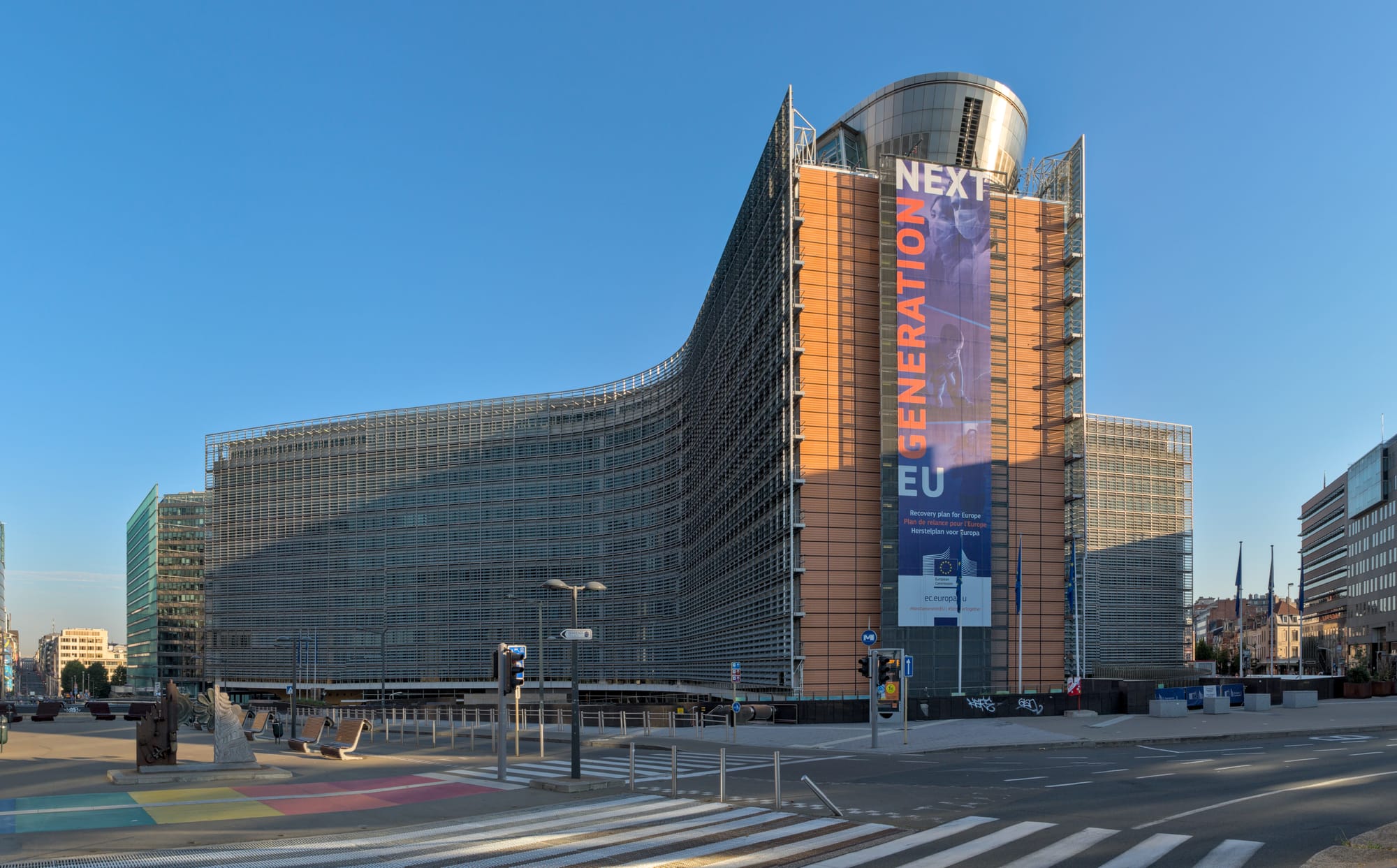
Pressure came from several directions. POLITICO reported that the European Publishers Council (EPC) wrote to EU competition commissioner Teresa Ribera and tech commissioner Henna Virkkunen. It asked them to press Meta to put the terms on hold before 30 October, to check them against EU copyright and competition law, and to meet urgently. The same report said Germany's newspaper and magazine associations issued a joint statement calling the terms "unscrupulous theft" and asking Brussels to block them while it reviews them.
On 22 October, Reuters reported that MOW, an advocacy group whose members include digital advertisers and publishers, had complained to the European Commission and the CMA and requested interim measures. Its press release says the complaint argues the terms breach the Unfair Trading Conditions rules (Section 18(2)(a)) of the Competition Act 1998.
MOW alleges that the terms give Meta an unlimited right to use content for its AI services. That is the complainants' characterisation. Meta said it disagreed with the complaint, telling Reuters: "The crawling terms we consolidated only applied to our ads and business products, and we've clarified that in the terms themselves."
Reuters reported the European Commission's response to the complaint. It said it would assess the complaint in line with its usual procedure and was committed to ensuring that Meta's practices comply with EU law.
The delay and what remained
On 23 October, Reuters reported that Meta would extend the effective date of its updated Commercial Terms and Self-Serve Ad Terms from 30 October to 20 November. A Meta spokesperson said this was "to allow more time for us to explain to our partners and stakeholders what's changing and what's not."
Search Engine Journal, citing Nieman Lab, reported that as of 23 October Meta had not changed the terms except for the date. It said the crawling paragraph still lets Meta use automated software and "create test credentials" to crawl pages associated with a business's products or services, and neither preview mentioned robots.txt. Search Engine Journal also reported that none of the regulator statements reported by Reuters or Nieman Lab ordered a delay. Meta announced it itself.
Publisher groups kept up the pressure. Search Engine Journal reported that WAN-IFRA, the World Association of News Publishers, asked Meta to temporarily stop the crawling provision for news publishers and make robots.txt binding within its terms. Stig Ørskov, whom Search Engine Journal identifies as WAN-IFRA's chief executive, said on 23 October: "This postponement is a welcome step, but it does not address our concerns."
In an update dated 29 October, the EPC said it had written again to the Commission. It said that Meta removing the word "train" "does not establish an express exclusion of AI training, fine-tuning, grounding, or the generation and display of answers and summaries." The EPC asked the Commission to scrutinise the terms under the Digital Markets Act and EU competition law. If interim measures cannot be adopted before 20 November, it asked the Commission to seek an immediate undertaking from Meta to postpone implementation of the contested provisions.
Elsewhere in Europe
Euronews, reporting on 30 October, described wider pushback. It said a Norwegian court "this week" temporarily banned Meta from enforcing the new user terms after ten media outlets argued they would threaten their rights to their content. It also reported that in France the Paris Appeals Court rejected a Meta attempt to overturn an order to negotiate in good faith with French media over rights payments. That is a separate dispute over payments for news content. Euronews says the court found Meta's conduct had caused "serious and immediate harm to the press sector". Euronews quoted a Meta spokesman as saying the company was disappointed with the Paris ruling.
What the record shows so far
Meta itself announced its changes so far: deleting the word "train" and limiting the stated purposes of the clause, a delay that the CMA says followed its engagement with the company, and then a pause. As of its 30 October announcement, the CMA's investigation is at its opening stage. The regulator will gather evidence from Meta and affected third parties, and its case page says it may close the investigation. It may instead issue a statement of objections if it provisionally considers competition law has been infringed.
The dispute turns on what Meta's wording permits and what Meta says it intends, and the two sides read it differently. Publishers read the terms as extensive access to their content with no way to refuse. Meta says they apply only to its ads and business products. The CMA will now test those readings against evidence.
Sources
Competition and Markets Authority (2026) 'CMA opens investigation into Meta's commercial terms', GOV.UK, 30 October 2026, available at: https://www.gov.uk/government/news/cma-opens-investigation-into-metas-commercial-terms--2 (Accessed: 1 November 2026).
Competition and Markets Authority (2026) 'Suspected abuse of a dominant position in relation to Meta's commercial terms', GOV.UK, 30 October 2026, available at: https://www.gov.uk/cma-cases/suspected-abuse-of-a-dominant-position-in-relation-to-metas-commercial-terms (Accessed: 1 November 2026).
European Publishers Council (2026) 'Update: Meta needs to draw a clear line between providing a service and appropriating rights from their business users', epceurope, update as of 29 October 2026, available at: https://www.epceurope.eu/post/update-meta-needs-to-draw-a-clear-line-between-providing-a-service-and-appropriating-rights-from-th (Accessed: 1 November 2026).
Benton, J. with AFP (2026) 'UK probes Meta over 'exploitative' new terms for media as global pushback mounts', Euronews, 30 October 2026, available at: https://www.euronews.com/2026/10/30/uk-probes-meta-over-exploitative-new-terms-for-media-as-global-pushback-mounts (Accessed: 1 November 2026).
Movement for an Open Web (2026) 'MOW files competition complaint over Meta business terms', Movement for an Open Web, 23 October 2026, available at: https://movementforanopenweb.com/mow-files-competition-complaint-over-meta-business-terms/ (Accessed: 1 November 2026).
Parry, J. and Gkritsi, E. (2026) 'Publishers want Brussels and London to stop Meta's new AI terms', POLITICO, 21 October 2026, available at: https://www.politico.eu/article/publishers-press-brussels-and-london-to-stop-metas-new-ai-terms/ (Accessed: 1 November 2026).
Reuters (2026) 'Meta to delay new commercial terms criticised by publishers, advertisers', Reuters, 23 October 2026, available at: https://www.reuters.com/business/media-telecom/meta-delay-new-commercial-terms-criticised-by-publishers-advertisers-2026-10-23/ (Accessed: 1 November 2026).
Reuters (2026) 'Publishers, advertisers call EU, UK antitrust regulators to suspend Meta's new commercial terms', Reuters, 22 October 2026, available at: https://www.reuters.com/legal/litigation/publishers-advertisers-call-eu-uk-antitrust-regulators-suspend-metas-new-2026-10-22/ (Accessed: 1 November 2026).
Tabahriti, S. and Tobin, S. (2026) 'UK's CMA opens investigation into Meta's terms for publishers and advertisers', Reuters, 30 October 2026, available at: https://www.reuters.com/world/europe/uks-cma-opens-investigation-into-metas-terms-publishers-advertisers-2026-10-30/ (Accessed: 1 November 2026).
Southern, M. G. (2026) 'Meta Pushes Its Updated Business Terms Back To Nov. 20', Search Engine Journal, 26 October 2026, available at: https://www.searchenginejournal.com/meta-delays-business-terms-crawling/594388/ (Accessed: 1 November 2026).
TNW (2026) 'European publishers ask EU and UK regulators to stop Meta's AI terms', TNW, 22 October 2026, available at: https://thenextweb.com/news/publishers-eu-uk-regulators-meta-ai-terms (Accessed: 1 November 2026).
Picture credits
- Top picture: Illustrative image of Meta's offices. Image: Meta headquarters: InvadingInvader, CC BY-SA 4.0, via Wikimedia Commons
- (Sarah Cardell, CMA chief executive: © Crown copyright, published under the Open Government Licence v3.0). Photo: British Government, Open Government Licence 3.0 (source)
- Image: Berlaymont building, European Commission headquarters, Brussels: Benoit Brummer (Trougnouf), CC BY 4.0, via Wikimedia Commons


