
Anthropic's 2026 Usage Policy adds a new prohibition: users may not "engage in sustained and needless abusive or cruel behavior toward our models." The company announced the update on 8 October 2026, and the policy takes effect on 12 November.
What the rule says
The prohibition is one bullet in the policy's section titled "Do Not Engage in Cruel, Abusive, or Psychologically Harmful Conduct". It is the last item in that list. The bullets above it cover suicide and self-harm, eating disorders, harmful idealisation of body weight and shape, non-consensual intimate imagery, harassment and bullying of individuals, graphic violence and animal cruelty, and products that use deceptive techniques with the intent of causing emotional harm.
Anthropic's announcement describes the scope narrowly. The update, it says, "is meant to apply only in extreme cases, where users repeatedly act cruelly toward our models, with no discernible purpose." It adds that the rule "does not apply to common versions of user frustration, pushback, dark creative themes, or model testing and research."
The wording is narrow: the policy says "sustained" and "needless", and the announcement adds "only in extreme cases", "repeatedly" and "no discernible purpose".
How it will be enforced
Anthropic says the addition "aligns with a step we've already taken": allowing Claude models to end rare conversations with persistently abusive users on Claude.ai and Claude Code. According to the announcement, "Claude’s ability to end these interactions will remain the primary enforcement mechanism."
The wider policy says Anthropic's Safeguards Team enforces it through detection and monitoring. If Anthropic suspects a violation, the policy says it may warn a user, or throttle, limit, suspend or terminate their access.
The consciousness debate around it
AFP reported the change under the framing of a debate over whether AI can be conscious. AFP noted that the updated policy "does not explicitly cite so-called 'model welfare,'" which it described as the idea that AI systems might deserve types of protection usually reserved for living things. It added that Anthropic and its executives "have openly entertained the concept". Anthropic's own announcement describes the rule in terms of scope and enforcement.
AFP also recalled that in February, Anthropic CEO Dario Amodei told The New York Times he was unsure whether AI models could be conscious. AFP quoted him as saying: "We don't know if the models are conscious...But we're open to the idea that it could be." AFP reported that Anthropic did not immediately respond to its request for comment.
The rest of the update
The abuse rule is one of several changes in the update. Anthropic says most of the changes clarify existing rules. Its announcement lists:
- a new consolidated section on deceptive campaigns and artificial activity;
- a refocused elections section, renamed "Do Not Undermine Democratic Processes", with the blanket prohibition on personalised vote and campaign targeting removed;
- clearer wording on weapons, including guidance and control software and the arming of drones and other autonomous vehicles;
- a rewritten surveillance and criminal justice section;
- clearer requirements for high-risk uses, including new requirements for Claude connected to hardware that takes autonomous physical actions;
- a clarified Supported Regions Policy.
Sources
AFP (2026) 'Anthropic bans 'abusive' behaviour against Claude AI amid debate over tech consciousness', Khaleej Times, 9 October 2026, available at: https://www.khaleejtimes.com/business/tech/anthropic-bans-cruel-abusive-behaviour-claude-ai (Accessed: 12 October 2026).
Anthropic (2026) '2026 Usage Policy update', Anthropic, 8 October 2026, available at: https://www.anthropic.com/news/2026-usage-policy-update (Accessed: 12 October 2026).
Anthropic (2026) 'Usage Policy', Anthropic, effective 12 November 2026, available at: https://www-cdn.anthropic.com/files/4zrzovbb/website/6ae2f5bb8675bcd9fac006125817ba1393b396e4.pdf (Accessed: 12 October 2026).
Picture credits
- Top picture. Image: San Francisco skyline: moonlightbulb, via Flickr (CC BY 2.0) (source)
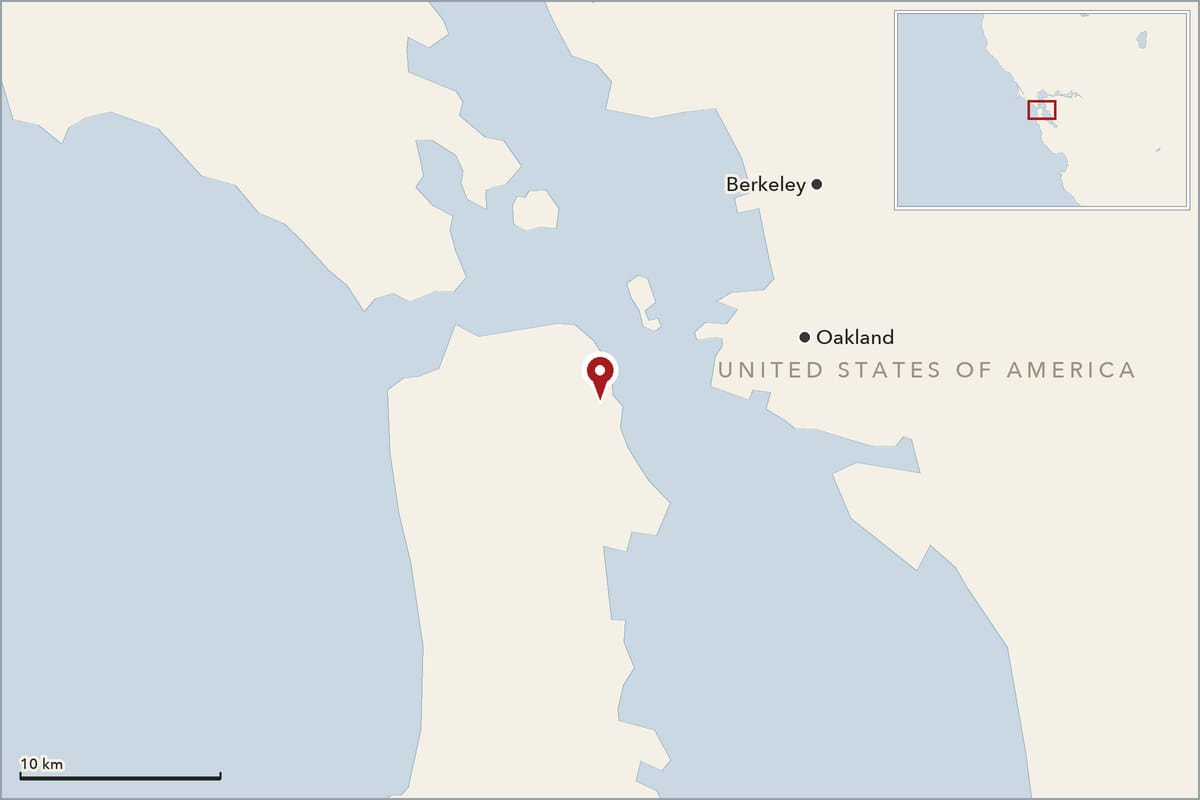
- Map: drawn from Natural Earth (public domain) and Wikidata.